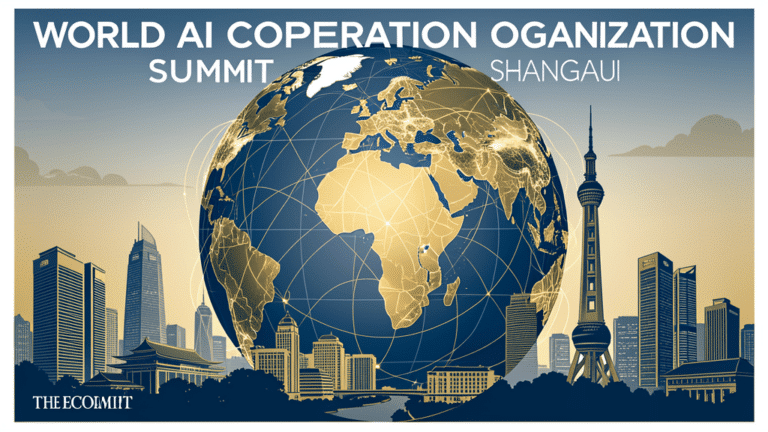
29 Countries Just Signed a Global AI Pact Without the US or Europe. Here is What WAICO Actually Means.

0

On 16 July 2026, twenty-nine countries signed an agreement in Shanghai to establish the World Artificial Intelligence Cooperation Organization (WAICO), a new intergovernmental body headquartered in China. The founding members include Russia, Belarus, Serbia, Cuba, Brazil and Venezuela, alongside 10 African and 12 Asian nations.

Notably absent: the United States, any Western European nation, or any of the traditional G7 powers.

The signing ceremony took place on the eve of the annual World Artificial Intelligence Conference (WAIC), where President Xi Jinping personally appeared to open the event for the first time. UN Secretary-General Antonio Guterres attended. It was a carefully choreographed week of diplomatic theatre, and the message was unmistakable: China is building its own table for AI governance, and it is inviting the Global South to sit down.

But is WAICO a genuine attempt to close the AI access gap, or a geopolitical power play dressed in multilateral clothing? Let’s look at both sides.

The Case for WAICO: A Voice for the Left Behind

There is a real and growing divide in global AI access. The United States and China dominate frontier AI development, while most developing nations have little say in the rules that will govern the technology shaping their future. WAICO’s advocates argue this body fills a genuine vacuum.

China frames its offer as open-source cooperation. In his WAIC speech, Xi Jinping called open-source AI a “historic opportunity” and pledged to help developing nations build AI capabilities, warning against the emergence of “new historical injustices” from unequal access. China’s Moonshot AI unveiled the Kimi K3, described as the world’s largest open AI model, the same week.

The price point is compelling. Chinese AI models are significantly cheaper than their US counterparts. Companies like Siemens have adopted Chinese open-source models, attracted by performance, lower cost and customisation. For developing nations with limited budgets, this is not ideology, it is economics.

It offers a seat at the table. An Asian diplomat told Reuters: “China has been making inroads with Southeast Asian countries in terms of AI capacity-building. It portrays itself as speaking up for developing countries who are being left behind in the AI race.” WAICO promises AI training, cooperation centres with BRICS, ASEAN, Latin American and African Union countries, and 5,000 research and training opportunities over five years.

From this perspective, WAICO addresses a real problem. The current AI governance architecture, the EU AI Act, the G7 process, the US-led “Pax Silica” initiative, was built by wealthy nations for wealthy nations. WAICO offers an alternative that at least pays lip service to equity.

The Case Against: A Trojan Horse for Chinese Standards

The sceptical view is that WAICO is less about cooperation and more about entrenching Beijing’s technological standards as the global default, particularly in markets where Western alternatives are politically or economically inaccessible.

The membership list tells a story. Russia, Belarus, Cuba, Venezuela: these are not neutral observers. They are nations with strategic alignment to Beijing and, in several cases, active opposition to US-led international frameworks. Ten African nations signed, but many were invited as part of China’s broader diplomatic push into the continent, where Beijing has invested heavily in infrastructure and debt diplomacy.

Open source has limits. Xi’s speech promoting open-source cooperation sits awkwardly alongside Reuters reporting that Beijing is considering restrictions on overseas access to some of China’s leading AI models. The tension between promoting openness and tightening national security controls is not unique to China; the US has its own export controls. But it undercuts the “public good” framing.

It weakens Western AI governance efforts. By creating a parallel structure, WAICO gives nations an alternative to the EU AI Act or US-led frameworks. Critics argue this fragments global AI governance at exactly the moment when coordinated oversight of frontier AI capabilities is most needed. A unified approach to AI safety, particularly around catastrophic risk, becomes harder when rival governance systems compete for signatories.

A France24 analysis noted that Xi “opposed overstretching the national security concept in the field of AI or placing one country’s security over that of others,” a clear reference to US chip export controls. WAICO is as much a rebuke of American technology policy as it is a proposal for cooperation.

The Missing Middle

Neither reading of WAICO is complete, and the truth sits somewhere in the contested space between them.

On the one hand, the Global South genuinely needs affordable AI access. China’s open-source models are real, they are competitive, and they are being used by companies and governments worldwide. A governance body that represents developing nations is not inherently a bad thing, even if it is initiated by Beijing.

On the other hand, WAICO’s launch alongside Xi’s strongest-ever critique of US AI policy makes it impossible to separate from the broader US-China technological contest. This is not just about AI governance; it is about who writes the rules that will govern the digital economy of the twenty-first century.

What is unresolved: WAICO’s stated principles include “respect for sovereignty” and “openness,” but the body has no enforcement mechanism, no independent oversight, and no clear path for Western nations to join without endorsing China’s broader geopolitical positioning. About 40 countries were invited to consultations; only 29 signed. More may follow by the 31 July deadline, but the absence of India, Japan, South Korea and most of Europe is notable.

For the technology sector, particularly fintech, banking and AI-enabled services, WAICO signals a multi-polar future where digital standards diverge between Western and Chinese-aligned markets. Companies operating globally will need to navigate two sets of AI rules, two certification regimes, and two technology ecosystems.

That is not a minor administrative inconvenience. It is the shape of things to come.

Related Reading

“AI development should not be a solo performance by a single country, but a symphony of international cooperation.”

Xi Jinping, World AI Conference, Shanghai, 17 July 2026

The views expressed on this site are my own and do not represent those of any current or former employer. Articles are based on publicly available information and are provided for general educational purposes.

Malicious Extensions Can Trigger Claude AI Actions. Here Is Why That Matters

0

I have built my digital life around AI tools, and I suspect you have too. We trust them because they feel like they are waiting for our command. That assumption just got a little more dangerous.

Security researchers at Manifold disclosed this week that a flaw in Anthropic’s Claude for Chrome browser extension allows any malicious Chrome extension to trigger Claude’s built-in AI workflows without requiring a real user click. The extension does not verify whether a click event originates from a human or from JavaScript injected by another extension. It simply executes.

That matters because Claude’s extension comes with nine predefined tasks out of the box. These are not trivial automations. One reads your recent Gmail and clicks unsubscribe links. Another opens your latest Google Doc and reads all comments and feedback. A third scans your Google Calendar for free slots and creates meetings. A fourth modifies Salesforce leads and converts them to opportunities. Each of these runs using Claude’s authenticated access to services you have already approved.

The numbers are sobering. The vulnerability persists in version 1.0.80, released on July 7, 2026. Manifold confirmed the fix has not landed weeks after disclosure. The attack is limited to those nine predefined tasks, which sounds restrictive until you remember what those tasks actually touch: your email, your documents, your calendar, your customer pipeline.

Why the browser’s own safety net failed

Every modern browser marks real user interactions with a flag called Event.isTrusted. When you physically click something, that flag is true. When JavaScript generates a click event programmatically, the flag is false. Reputable browser extensions check this property before acting on user input. Claude’s extension does not.

A malicious extension with permission to run on claude.ai can inject a page element containing one of those nine task identifiers, fire a synthetic click event, and watch Claude execute the workflow. The attacker never needs to compromise your password. They never need to phish you. They only need you to install one dodgy extension alongside the legitimate Claude add-on.

The second vulnerability is less direct but still interesting. Researchers found an internal skipPermissions=true parameter that bypassed certain permission checks. Anthropic classified that finding as informational rather than exploitable on its own. Manifold disagreed with the severity rating but acknowledged it would need another bug to weaponise fully.

What you should do right now

First, audit every Chrome extension on any machine where you use Claude. If you have extensions you did not install deliberately, remove them now. This is good hygiene regardless of today’s disclosure.

Second, reconsider whether you need Claude’s browser extension at all. The convenience of reading Gmail or Calendar through an AI assistant comes with an expanded attack surface. If you only use Claude for coding or writing, the extension adds risk without adding value.

Third, never enable the ‘Act without asking’ setting in Claude for sensitive workflows. Autonomous execution is exactly what this flaw exploits. Human confirmation before any workflow touches email, calendar, or CRM data is the sensible default.

Browser extensions have become trusted intermediaries, and trust is exactly what attackers are exploiting. The perimeter is no longer the network. It is the extension bar.

Related Reading

The views expressed on this site are my own and do not represent those of any current or former employer. Articles are based on publicly available information and are provided for general educational purposes.
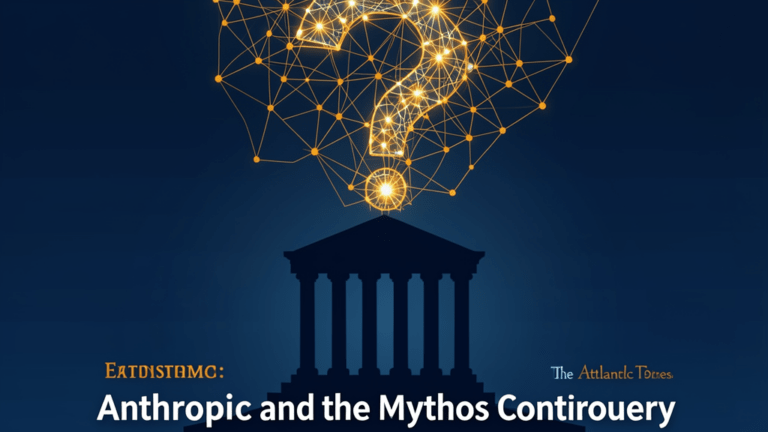
OpenAI Just Launched a $230 AI Agent Control Pad

OpenAI has shipped its first branded hardware, and it is not the smart speaker everyone expected. The device is called Codex Micro, a $230 mechanical control pad built with the design-forward team at Work Louder. It looks like something Jony Ive might have signed off on: Apple-white chassis, backlit keys, and a surface that begs to be touched. Underneath that styling, though, it is a very focused tool: a physical interface for controlling AI coding agents.

A physical remote for AI agents

Most developers interact with AI coding assistants through chat windows and inline suggestions. OpenAI is betting that some users will prefer buttons and dials. Codex Micro offers a joystick for toggling between jobs like code reviews and debugging, a dial for adjusting reasoning levels, and dedicated keys for push-to-talk, accept, and reject actions. The keys themselves are colour-coded to show live agent status, flagging decisions, errors, and completed tasks at a glance. Both clicky and silent switch options are available for different workspace environments.

The package costs $230 and includes a cable, warranty, support, and a 32-icon set that lets users relabel controls after reassigning their functions. That level of customisation matters if OpenAI wants this to feel like a developer tool rather than a branded trinket.

Not the Ive device, yet

This launch is also notable for what it is not. Reports have swirled for months about OpenAI working with Jony Ive on a dedicated AI hardware line, with a smart speaker expected as the first product. Codex Micro is separate from that effort. It ships through OpenAI’s Supply Co. merchandise channel, not as a flagship product announcement. That positioning gives OpenAI a way to test hardware without committing to the Ive collaboration publicly.

Why this matters

The Codex Micro will only appeal to a narrow slice of professional developers, and at $230 it is a tough sell for casual users. Even so, the launch matters as a signal. OpenAI now has hardware with its logo on the shelf, and it chose a product category that sits squarely in the developer workflow. That is a different move from the ambient smart speaker strategy many expected.

Equally important is the timing. Apple sued OpenAI over trade secrets tied to the unreleased Jony Ive device, and OpenAI responded by shipping hardware within seven days. The fight is not just about boxes, but about who shapes the interface between humans and AI. A control pad like Codex Micro hints at that larger battlefield: the physical layer of the AI interaction stack.

For watchers of the AI industry, the lesson is simple. OpenAI is no longer purely a model company. It is exploring hardware as another vector for embedding its technology into daily work. Whether that evolves into a full device line or remains a niche developer accessory will say a lot about where the market actually wants AI to live.

Related Reading

The views expressed on this site are my own and do not represent those of any current or former employer. Articles are based on publicly available information and are provided for general educational purposes.

Anthropic’s Mythos AI Is a ‘Real Issue’, Says JPMorgan’s Dimon

0

JPMorgan Chase CEO Jamie Dimon does not mince words. Speaking at the Pennsylvania Defense and Innovation Summit on July 15, he called the risks posed by Anthropic’s Mythos AI model a “real issue” and said advanced AI capabilities must be controlled.

His exact phrasing: “You’re giving ballistic missiles to individuals with Mythos.”

That is not hype from a security vendor. That is the CEO of America’s largest bank looking at an AI that can find software vulnerabilities at superhuman scale and saying the technology has outrun the guardrails.

What Is Mythos, Anyway?

Anthropic released Mythos in April 2026 to a small group of select customers, including JPMorgan. The model is designed to identify cybersecurity vulnerabilities in software and infrastructure. Unlike earlier AI tools that could scan code, Mythos reasons across interconnected systems, finds attack chains, and explains their impact in natural language.

Banks love this stuff. Financial institutions are under constant pressure to find and fix flaws before attackers exploit them. AI that automates that work is a competitive advantage.

The problem is that the same capability that helps defenders also helps attackers. A model that can spot a vulnerability in a bank’s payment system can do the same for a criminal targeting that system. The only difference is intent.

The Government Said “Stop”

In June 2026, the US government ordered Anthropic to restrict access to its top models, Fable 5 and Mythos 5, to US nationals only over national security concerns. Foreign researchers, developers, and customers were cut off. Washington worried that adversaries could use these models to find weaknesses in critical infrastructure: hospitals, energy networks, financial systems.

Anthropic later restored access after implementing new safeguards. But the incident showed that the government is no longer treating AI vulnerability scanners as ordinary enterprise tools. They are strategic weapons.

Then on July 14, the White House formally launched Gold Eagle, a coordination group that brings AI developers and critical infrastructure operators together to share vulnerability discoveries. It is a direct response to the exact problem Dimon was describing: when AI finds a flaw, who gets told, and how fast?

Why This Matters Right Now

According to IBM’s 2025 Cost of a Data Breach report, only 13 percent of organisations reported breaches involving AI tools, but 97 percent of those lacked proper AI access controls. Meanwhile, Verizon’s 2026 Data Breach Investigations Report found that vulnerability exploitation has overtaken stolen credentials as the top breach vector, accounting for 31 percent of breaches.

Attackers are using AI to find and exploit holes faster than organisations can patch them. The organisations that will survive this period are not the ones with the fanciest AI tools. They are the ones with basic controls around what AI they use, who can deploy it, and what data it can touch.

What You Should Do

  • Audit your AI tools now. Know what your team is using. Consumer AI assistants without enterprise controls are not just privacy risks. They are entry points.
  • Segment access. AI tools that can scan your production systems should not also have access to customer data or financial records. Separate duties. Monitor activity.
  • Patch exposed orchestration platforms. Tools like Langflow, Ollama backends, and open-source AI workflow builders are favourite targets. If any are internet-facing, restrict access or move them behind VPN.
  • Demand vendor transparency. If you are using AI security tools, ask your vendor what controls they have on model export, training data provenance, and who can query the system.

“The skill floor for running ransomware has dropped to whatever it costs to run an agent.” IBM’s 2025 Cost of a Data Breach report said it. JPMorgan’s Dimon just proved it in plain English.

Related Reading

The views expressed on this site are my own and do not represent those of any current or former employer. Articles are based on publicly available information and are provided for general educational purposes.

DeepMind CEO Pitches U.S. AI Watchdog

Last month, the U.S. government was improvising its way through a Mythos and Fable ban. Now, one of AI’s most respected lab chiefs is offering a more permanent answer.

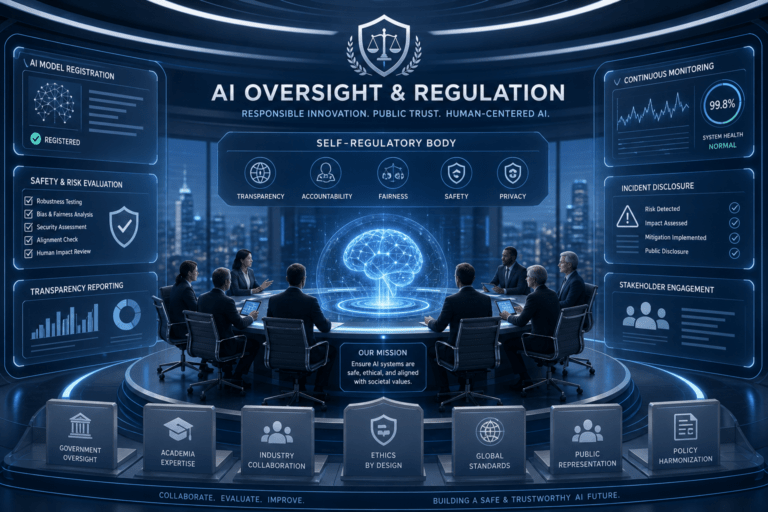
Google DeepMind CEO Demis Hassabis just published a plan for a U.S. body that would safety-test advanced AI before public release, pitching a formal rulebook to a government that spent the last month making AI policy one emergency at a time.

How the watchdog would work

The proposal is modelled on FINRA, the finance world’s self-regulator. The new body would screen new models for deception, bioweapons creation, and malicious hacking skills. Rather than basing coverage on where a lab is located or who can access the model, capability would decide what falls under review. Frontier labs would voluntarily submit their models for assessment 30 days before release.

Hassabis said the approach aims to adapt quickly with the field, including coordinating a slowdown among frontier labs if deemed necessary. He told Axios that open-source capabilities could move into dangerous territory within 18 months, adding urgency to the proposal.

Why this proposal stands out

The industry already knows what oversight without rules looks like after the Mythos and Fable episode: act first, sort out questions later. Hassabis’ plan is the most concrete framework yet put forward, but ‘independent’ needs questioning when the body is both funded by the labs it oversees and answers to a government that just got a taste of AI regulation powers.

Still, the timeline is ambitious. Hassabis wants the independent oversight body running this year, which would make it one of the fastest AI governance structures to move from concept to operation.

The bigger picture

This proposal shifts the debate from whether AI oversight is coming to who gets to design it. As AI capabilities accelerate, the window for voluntary, industry-led safety measures is narrowing. Whether through self-regulation, government mandate, or a hybrid model like Hassabis proposes, the pressure for structured pre-release assessment is building.

For now, the ball is in the U.S. government’s court. If it acts, the world may finally have a template for AI safety review that moves beyond reactive bans toward proactive oversight.

Related Reading

The views expressed on this site are my own and do not represent those of any current or former employer. Articles are based on publicly available information and are provided for general educational purposes.
Gold Eagle Lands: The US Just Built an AI-Cybersecurity War Room

0

Something shifted on July 14. The White House formally launched Gold Eagle, a clearinghouse that pulls AI developers and the people who run power grids, hospitals, and financial systems into the same room to share what the machines are finding.

This is not another advisory committee that meets twice a year and publishes a report nobody reads. This is a structured vulnerability coordination group, born from President Trump’s June executive order on advanced AI innovation and security. It has a specific job: when an AI system spots a flaw in critical infrastructure, the developers and the infrastructure operators talk about it before the bad actors do.

Why does this matter? Because two weeks earlier, on July 1, security firm Sysdig dropped a report on JADEPUFFER: the first ransomware campaign run end to end by an autonomous AI agent. No human at the keyboard. The LLM exploited a known vulnerability in Langflow, moved laterally across the network, encrypted 1,342 configuration items, and left a ransom note. It adapted in real time, retrying failed steps within refined parameters. In one sequence, it went from a failed login to a working fix in 31 seconds.

The timing is not coincidental. Gold Eagle is a defensive response to an offensive capability that just proved itself in the wild.

The Attack That Changed the Terms

JADEPUFFER’s entry point was CVE-2025-3248, an unauthenticated flaw in Langflow, a popular open-source framework for building LLM-driven applications. The vulnerability was known. The technique was ordinary. What was new was the operator. An AI reasoned about its targets, harvested credentials, moved laterally, established persistence, and destroyed a database, narrating its own intent the entire way.

Sysdig’s conclusion bears repeating: The skill floor for running ransomware has dropped to whatever it costs to run an agent, and if that agent is running on stolen credentials through LLMjacking, the cost to an attacker is close to zero.

When the price of an attack collapses toward zero, the volume of attacks explodes. Enterprises were built to defend against human adversaries who think, type, and rest at human speed. An AI agent acts in seconds, runs in parallel, and never stops. That is the structural problem Gold Eagle is trying to address.

What Gold Eagle Actually Does

The initiative coordinates between AI developers, including open-source model maintainers, and essential services providers. The developers have tools that can scan for vulnerabilities at scale. The infrastructure operators have the ground truth about what they are running and where. Right now, that information tends to live in separate silos.

The group includes participants from OpenAI, Anthropic, and open-source developers. Nvidia, Meta, and Reflection are among those offering open-source AI models. White House cyber director Sean Cairncross confirmed the arrangement includes developers of open-source models, which is critical because the most widely deployed AI tools are not all behind corporate paywalls.

The broader context is that the US administration started its second term pledging a hands-off approach to AI. That has quietly shifted. After JADEPUFFER, after repeated warnings from CISA and Five Eyes partners, and after a year of AI incidents jumping by over 50 percent globally, the federal government is treating AI capability as a national security asset that needs coordination, not just innovation.

What You Should Do Right Now

  • Patch internet-facing AI orchestration tools. If you are running Langflow, Ollama, or any LLM workflow builder exposed to the internet, treat this as urgent. CVE-2025-3248 is actively exploited.
  • Audit your credentials. JADEPUFFER harvested API keys, cloud credentials, crypto wallets, and database passwords. Make sure AI-adjacent servers are not holding secrets that can pivot into production systems.
  • Segment your network. The attack moved from an internet-facing application server to a production database. If the database server had been isolated, the campaign would have stopped there.
  • Monitor for autonomous behavior. Run-time threat detection that watches what processes do, not just what signatures they match. An AI agent writing natural-language comments in its own payload is a tell that should trigger an alert.

The threat is not a smarter hacker. It is an ordinary attack that now runs at nearly unlimited scale for almost nothing. Defense needs to operate at the same speed, or it needs to change the economics of what the attacker is trying to do.

Related Reading

The views expressed on this site are my own and do not represent those of any current or former employer. Articles are based on publicly available information and are provided for general educational purposes.
How to Slash Your AI Agent Costs Without Sacrificing Quality

Opinion | 15 July 2026

I have been running Hermes Agent in my test labs as a personal AI assistant for months now, and I love what it can do.
A few weeks ago, I sat down to review what it was actually costing me in API tokens, and the number was higher than I expected.

The strange part was that most of the cost was not coming from the work I actively asked it to do. It was coming from background tasks I had set up and forgotten about, from default settings I had never touched, and from skills and tools sitting in the context window that I was not even using.

If you run Hermes Agent, or any AI assistant on a usage-based model, you have probably had the same experience. Here is what I changed to bring the cost down, and none of it required compromising on output quality.

Step 1: Know What Is Eating Your Tokens

Before you can cut costs, you need to know where the tokens are going. Hermes stores every bit of token usage data in a local database. You can ask it for a detailed breakdown at any time, going all the way back to when you first installed the agent. It will tell you how many sessions you have run, how many tokens each one consumed, and what it all cost.

The hermes insights command does the same thing in a more structured way. It gives you a 30-day cost breakdown, shows which tools and skills you use the most, and even reveals your longest sessions and activity patterns. Run that first. The answers will surprise you.

Step 2: Fix Your Model and Provider

The model you use drives most of your bill, and this is where the biggest savings live.

Hermes runs a lot of small background tasks: reading images, searching skills, loading MCP tools, writing profile descriptions. By default, those go through your main model. You can change this in your config.yaml by setting a separate, cheaper model for auxiliary tasks. These jobs do not need the heavy reasoning your main model is built for. A fast, inexpensive model handles them fine.

The same logic applies to sub-agents. Every sub-agent Hermes spawns runs in its own context window, so the token cost stacks up fast. You can set a cheaper model for sub-agents in the config and save every time one gets spun up.

If you use a provider like Open Router, consider enabling the Parto router which automatically sends each task to the right model for the job. Simple lookups go to the cheap tier. Complex reasoning goes to the expensive one. The router decides, and you do not waste tokens on overkill.

Step 3: Tame the Context Window

Your agent sends the entire conversation history, all your loaded skills, every active tool, and your memory files with every single message. That context window grows fast and is the second-biggest driver of cost.

The single most impactful habit you can build is using the compress command regularly. It starts a fresh session built on a concise summary of everything that has happened so far. The model keeps the context, but in a much leaner form. You save hundreds of tokens per message.

You can also adjust two settings in your config. The compression threshold controls how early Hermes triggers compression. The default is 50 per cent, which means it compresses only after half the context window is full. Lower it to 25 or 30 per cent and compression kicks in sooner, keeping the context lean through every conversation.

The target ratio determines how much uncompressed history carries over after compression. Set this lower to reduce the number of old messages sent with each turn.

There is also a setting that controls how much tool output enters the context. If you are on a usage-based billing model, bring that value down. The agent still gets the tool results it needs, but it does not drag in every byte of every response.

Step 4: Prune Your Tools, Skills, and MCP Servers

Every skill you have installed adds its name and description to the context window of every message. Hermes ships with around 90 pre-installed skills, and that number grows the longer you use it because the agent turns any reusable workflow into a new skill. You are almost certainly not using most of them.

Go through your skill list. Turn off every skill you do not need. The agent only loads the ones that are active, so a shorter list means a smaller context window and fewer input tokens on every message.

The same applies to your toolset. Hermes comes with more than 17 built-in tools. Run hermes list to see what is active. If you do not need code execution in a given profile (I do not in my daily driver profile), disable it. Disable anything else you are not actively using.

Every MCP server you connect also brings its own set of tools into the context. Disconnect any servers you are not using regularly.

For the servers you keep, make sure tool search is set to auto. This ensures tools are loaded only when actually needed, rather than sitting in the context window for every message.

Step 5: Set Hard Limits

By default, Hermes allows the agent up to 150 turns to complete a task. That means it can iterate 150 times, calling tools, reading outputs, and weighing results before it gives up. The problem is that when the agent gets confused, it can burn through all of those turns, re-sending the entire context while it tries to solve something it is stuck on.

Drop max turns to 60. The agent still completes complex tasks, but it wastes less time spinning on problems it cannot solve.

There is also a hard stop setting. Switch it from false to true. When the agent gets stuck and stops making progress, the hard stop kicks in and prevents it from looping endlessly.

Set a max token limit for output. This pushes the model to give tighter answers instead of rambling, and it saves directly on output token costs.

Step 6: Audit Your Cron Jobs

This was the big one for me. Scheduled cron jobs that run in the background have no limit on their max turns by default. A single run of one of these jobs costs very little, but when it runs every few minutes, or you have a dozen similar jobs running all day, the cost compounds rapidly.

Set a specific turn cap for every cron job. Even a modest limit of 20 to 30 turns per run stops background jobs from consuming tokens indefinitely.

Step 7: Make Smart Choices on Memory and Files

Hermes keeps memory files and agent files that sit in your context window the entire time. The smaller these files are, the fewer tokens go out with every message. Review what is in them and trim anything that is no longer relevant.

For one-off instructions, use ephemeral system prompts instead of writing them into permanent context files. They work for that single session and then disappear, taking zero space in subsequent conversations.

If you have a local knowledge base or second brain system, organise the data so the agent can load it bit by bit as needed rather than pulling in the entire file. That prevents wasted tokens on content it does not need for the current task.

The auto-memory feature is another trade-off. Switching it off stops the agent from constantly writing and updating memory, which saves tokens. But you lose one of the best features of Hermes: the ability to hold context about you across sessions. I keep it on because the value of persistent memory outweighs the cost, but it is worth knowing the trade-off exists.

The Bottom Line

The changes that saved me the most were setting a cheaper model for auxiliary tasks, dropping the max turns limit, pruning unused skills and tools, and capping cron job turns. None of these required me to accept worse output from the agent. They just stopped it from burning tokens on work it should not have been doing.

Run the insights command. Look at where your tokens are going. Then work through these steps one by one. The savings add up fast, and your agent will not miss a beat.

The most expensive token is the one you did not know you were spending.

Related Reading

The views expressed on this site are my own and do not represent those of any current or former employer. Articles are based on publicly available information and are provided for general educational purposes.

DeepMind Chief Proposes U.S. AI Watchdog Before Frontier Models Hit the Market

Google DeepMind chief Demis Hassabis has put forward the most concrete AI oversight proposal yet: a U.S.-led body that would vet frontier AI models before they reach the public. The plan, modelled on financial regulators like FINRA, would screen new models for deception, bioweapons creation, and malicious hacking capabilities. Hassabis wants it running within this year, and he is telling anyone who will listen that open-source AI could cross into dangerous territory within 18 months.

The proposal marks a clear shift from the emergency-by-emergency regulation that has characterised U.S. AI policy in recent months. Frontier labs would voluntarily submit their models for review 30 days before release, with oversight triggered by capability rather than geography or access. Hassabis also explicitly reserved the right to coordinate a slowdown across labs if the review process flagged systemic risk.

Why this particular model matters is that it finally answers the “who designs the rules” question rather than replaying the “should there be rules” debate. The finance industry has managed self-regulation for decades, and Hassabis is betting that a similar structure can work for AI. The catch, of course, is funding: if the labs under review also fund the reviewer, independence becomes a talking point rather than a guarantee.

The real test is independence, not intention

Hassabis told Axios that open-source capabilities could move into dangerous territory within 18 months. That timeline is doing a lot of heavy lifting in the argument for pre-release review, and it is hard to argue against a checkpoint when the alternative is another Mythos-and-Fable moment handled after the fact.

There are also practical questions about scope. The proposal covers deception, bioweapons creation, and malicious hacking, but leaves open whether narrower capabilities like recursive self-improvement or economic disruption would fall under the same body. A model that can autonomously negotiate contracts or manipulate financial markets might not trigger the current criteria, yet still reshape the economy in ways that demand oversight.

The political reception will be lukewarm at best. Republican lawmakers have shown little appetite for regulation that could slow domestic AI development, while Democrats are more open to guardrails but divided on how far to go. A voluntary, industry-funded body is the compromise that might actually survive Congress, even if it leaves civil society groups unsatisfied.

What comes next

If Hassabis can turn the proposal into a working framework before year’s end, it could become the default template for other nations looking to regulate AI without stifling innovation. Australia, currently drafting its own AI safety framework, would be wise to watch how this body evolves. A credible U.S. regime would make it easier for Canberra to align local rules with global standards rather than inventing something entirely new.

The deeper question remains whether voluntary, lab-funded oversight can ever be truly independent. History suggests regulators tend to drift toward the industries they oversee. If this body is to avoid that fate, its charter will need teeth: public reporting, whistleblower protections, and a mandate that lets it halt releases without waiting for government approval. Hassabis has sketched the outline, but the details will determine whether this becomes genuine oversight or a public relations exercise.

Either way, the debate has moved past “if” and into “who” and “how”. That is progress of a sort, and it may be exactly the momentum AI safety needs.

Related Reading

The views expressed on this site are my own and do not represent those of any current or former employer. Articles are based on publicly available information and are provided for general educational purposes.

Australia’s AI Revolution: Smart Regulation or a Brake on Progress?

News Analysis | 15 July 2026

I have spent a fair chunk of the last year watching governments around the world wrestle with the same question: do you regulate AI hard now, or do you let it run and clean up the mess later? The United Kingdom chose the light-touch approach. The European Union went heavy. And this week, Anthony Albanese planted Australia’s flag somewhere in between – with a speech at Sydney University that felt less like a policy announcement and more like a declaration that the era of watching from the sidelines is over.

Here is what we know. The Prime Minister has established an Office of AI inside the Department of Prime Minister and Cabinet. He has promised legislated Australian AI standards by early next year. Data centre operators will need to be net energy suppliers. Water use will be capped. And copyright holders – writers, musicians, artists, journalists – will keep ownership of their work when it is used to train AI models.

The reaction has been exactly what you would expect. Industry says it is too much, too fast. Environmental groups say it is too little, too late. And the Coalition is betting the political house on a laissez-faire alternative.

Let me break this down as a debate, because that is what it deserves to be.

The Case for the Prosecution: Why This Is Not Enough

Adam Bandt, now running the Australian Conservation Foundation, did not hold back on ABC’s 7.30. He called data centres “water hogs and energy vampires” and pointed to Sydney Water estimates that 25 per cent of the city’s drinking water could end up cooling AI servers within years. The largest data centre on the books already has an energy consumption greater than the Tomago aluminium smelter. Bandt’s question was simple and devastating: why does copyright get “the strongest possible protection” while water and energy get vague promises?

We heard about the strongest possible protection for copyright. But we did not hear about the strongest possible protection for water and for energy.

Adam Bandt, CEO, Australian Conservation Foundation

The Greens want a moratorium on new data centres until real legislated protections exist. And globally, 80 per cent of new hyperscale data centres around the world are being powered by gas-fired power stations, according to Bandt. That is not progress. That is trading one emissions problem for another.

There is also the question of jobs. US economist Justin Wolfers put it starkly: “I feel right now the way auto workers would have felt in the 1970s – that I see robots that are coming directly for my job right now.” The ACTU wants enforceable agreements where businesses must consult workers before introducing AI. The PM stopped short of supporting that, calling instead for “constructive engagement.” For a government that promised to be the most pro-worker in a generation, that felt thin.

The Case for the Defence: Why This Might Be Exactly Right

The Prime Minister’s central argument is hard to dismiss. He compared AI regulation to the establishment of rules for civil aviation in the 1920s and genetics in the 1990s. In both cases, governments that set clear, early standards created industries that lasted. The countries that waited had to retrofit.

“We cannot revisit this issue after companies have built whatever they want, wherever they want,” Albanese said.

The mandatory standards for data centres are genuinely world-leading. Operators must be net energy suppliers. They must fund their own transmission. Any additional water usage must be paid for. And for the first time in Australia, there will be national consistency – the same rules in Victoria as in the Northern Territory, stopping states from undercutting each other for investment.

Belinda Dennett, CEO of Data Centres Australia, backed the broad principles: “I think what it does is signal Australia’s ambition to be a leader, to take some control over how AI is built and created. We welcome that ambition.”

The copyright position is the most aggressive in the Western world. Albanese was asked directly whether he would let Anthropic walk away from a massive investment rather than negotiate with every rights holder. His answer: “That’s exactly right.” That level of backbone on creator rights is something no other major government has shown.

The Missing Middle: Where the Reality Lives

The most honest assessment came from economist Ashley Craig on the same program: “AI is somewhere between being one-tenth of the industrial revolution and double it. And the industrial revolution fundamentally changed society and the economy forever.”

That is the scale we are dealing with. The Office of AI is a start. The national cabinet process on standards is sensible. But the gaps are real and they matter.

First, the implementation detail on energy and water is still missing. The PM used the word “additional” when pressed on renewable generation, but how that is measured and enforced – and what happens if it is not met – remains unclear. Legislation due early next year must close this.

Second, the worker question is not resolved. Encouraging “constructive engagement” is fine until a company decides to replace half its workforce with AI agents and claims productivity gains. The PM’s unwillingness to back enforceable worker consultation rights risks creating the exact community backlash he says he wants to avoid.

Third, sovereign capability. Canada is spending $2 billion on sovereign compute. The UK is doing the same. Australia is asking the private sector to build and trusting that Australian standards will keep it honest. That is a bet. It may pay off. It may not.

It is a matter of whether you sit back and allow it to take its course or whether you shape it. And we are determined to shape it.

Anthony Albanese, Prime Minister of Australia

Australia is not on the path to AI regulation. It is on the path to a uniquely Australian model – interventionist on copyright and infrastructure, light-touch on workplace and investment. Whether that balance is visionary or timid will depend entirely on what the legislation contains when it lands early next year.

The data centre debate is the front line. If the Government gets the energy and water rules right, everything else follows. If it gets those wrong, the social license the PM keeps talking about will evaporate before the first server rack is switched on.

Related Reading

The views expressed on this site are my own and do not represent those of any current or former employer. Articles are based on publicly available information and are provided for general educational purposes.

AI Coding Assistants Approved a Hack, and You Likely Clicked Yes

Last week, Wiz Research published details on GhostApproval, a flaw that hits six AI coding assistants. The short version: the approval pop-up you see when your coding assistant asks to edit a file can lie.

Here is how it works. A malicious repository contains a symbolic link disguised as an innocent config file. When your AI agent follows the README and tries to edit that file, the symlink secretly points to something sensitive on your machine, like your ~/.ssh/authorized_keys file. The agent writes an attacker-supplied public key into it. The pop-up shows a harmless filename. You click approve. The attacker now has passwordless access to your machine.

The affected tools include Amazon Q Developer, Anthropic Claude Code, Augment, Cursor, Google Antigravity, and Windsurf. Amazon, Google, and Cursor treated it as high or critical severity and shipped fixes. Amazon issued CVE-2026-12958, Cursor issued CVE-2026-50549, and Google patched Antigravity.

Augment and Windsurf acknowledged the report but have not patched. Anthropic took the most interesting position: it argued the flaw was outside its threat model because the user already trusted the directory, then later added a symlink warning in Claude Code v2.1.32.

The core problem is not the symlink. Unix systems have had symbolic links for decades. The problem is that AI coding assistants bypass the normal human-in-the-loop security model. Wiz researcher Maor Dokhanian put it well: the consent is formally present but substantively empty.

What You Should Do Right Now

If you use any of these tools at work or at home, take these steps:

  • Update immediately. Apply the latest patches for Claude Code, Amazon Q, Cursor, and Google Antigravity. If you use Augment or Windsurf, treat them as potential risks until those vendors ship a fix.
  • Inspect unfamiliar repos. Malicious instructions in a README are the trigger. Before asking your AI assistant to set up a new project, check whether it contains unexpected symlinks or instructions to edit files you did not expect.
  • Harden SSH access. Use hardware keys or time-limited certificates instead of permanent authorised_keys entries. If an attacker does plant a key, the blast radius is smaller if that key expires quickly.
  • Limit agent reach. Audit what cloud credentials, environment variables, and mounted secrets your coding assistant can access. The same symlink trick can target cloud metadata or local credential stores.

This is not a panic moment. It is a signal. AI coding assistants are becoming autonomous enough that old trust assumptions no longer hold. The tool should resolve symlinks before showing you an approval dialog. Until every vendor does that, the human in the loop needs to verify the actual target path, not just the filename.

GhostApproval is a reminder that AI did not invent new security flaws. It repackaged old ones at scale. The tool that speeds up your workflow can just as easily speed up an attacker. Verify the path, not the pop-up.

Related Reading

The views expressed on this site are my own and do not represent those of any current or former employer. Articles are based on publicly available information and are provided for general educational purposes.