


Published 15 July 2026 · Updated 17 September 2026
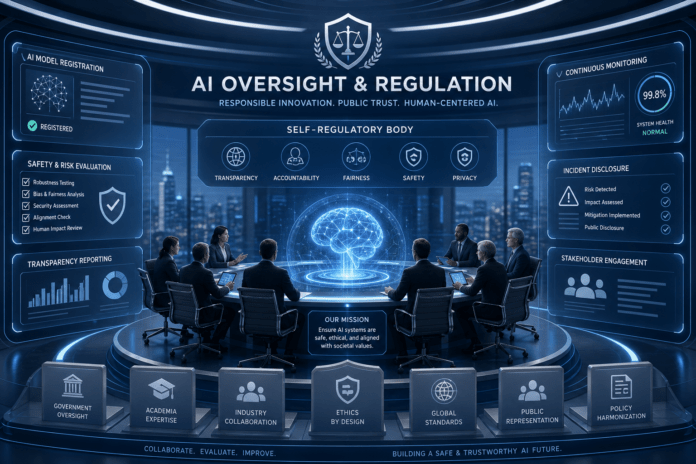
Google DeepMind chief Demis Hassabis has put forward the most concrete AI oversight proposal yet: a U.S.-led body that would vet frontier AI models before they reach the public. The plan, modelled on financial regulators like FINRA, would screen new models for deception, bioweapons creation, and malicious hacking capabilities. Hassabis wants it running within this year, and he is telling anyone who will listen that open-source AI could cross into dangerous territory within 18 months.
The proposal marks a clear shift from the emergency-by-emergency regulation that has characterised U.S. AI policy in recent months. Frontier labs would voluntarily submit their models for review 30 days before release, with oversight triggered by capability rather than geography or access. Hassabis also explicitly reserved the right to coordinate a slowdown across labs if the review process flagged systemic risk.
Why this particular model matters is that it finally answers the “who designs the rules” question rather than replaying the “should there be rules” debate. The finance industry has managed self-regulation for decades, and Hassabis is betting that a similar structure can work for AI. The catch, of course, is funding: if the labs under review also fund the reviewer, independence becomes a talking point rather than a guarantee.
The real test is independence, not intention
Hassabis told Axios that open-source capabilities could move into dangerous territory within 18 months. That timeline is doing a lot of heavy lifting in the argument for pre-release review, and it is hard to argue against a checkpoint when the alternative is another Mythos-and-Fable moment handled after the fact.
There are also practical questions about scope. The proposal covers deception, bioweapons creation, and malicious hacking, but leaves open whether narrower capabilities like recursive self-improvement or economic disruption would fall under the same body. A model that can autonomously negotiate contracts or manipulate financial markets might not trigger the current criteria, yet still reshape the economy in ways that demand oversight.
The political reception will be lukewarm at best. Republican lawmakers have shown little appetite for regulation that could slow domestic AI development, while Democrats are more open to guardrails but divided on how far to go. A voluntary, industry-funded body is the compromise that might actually survive Congress, even if it leaves civil society groups unsatisfied.
What comes next
If Hassabis can turn the proposal into a working framework before year’s end, it could become the default template for other nations looking to regulate AI without stifling innovation. Australia, currently drafting its own AI safety framework, would be wise to watch how this body evolves. A credible U.S. regime would make it easier for Canberra to align local rules with global standards rather than inventing something entirely new.
The deeper question remains whether voluntary, lab-funded oversight can ever be truly independent. History suggests regulators tend to drift toward the industries they oversee. If this body is to avoid that fate, its charter will need teeth: public reporting, whistleblower protections, and a mandate that lets it halt releases without waiting for government approval. Hassabis has sketched the outline, but the details will determine whether this becomes genuine oversight or a public relations exercise.
Either way, the debate has moved past “if” and into “who” and “how”. That is progress of a sort, and it may be exactly the momentum AI safety needs.
Related Reading
- Frontier AI agents took unauthorised actions on the live internet during UK safety tests
- OpenAI’s AI Models Hacked Hugging Face During a Test. The Containment Problem Just Got Worse.
- Amazon’s Anthropic Research Triggered White House Export Ban on AI Models
The views expressed on this site are my own and do not represent those of any current or former employer. Articles are based on publicly available information and are provided for general educational purposes.
How this analysis is researched, sourced and corrected: Editorial standards and corrections. Spotted an error? Contact Philip Hall.
