

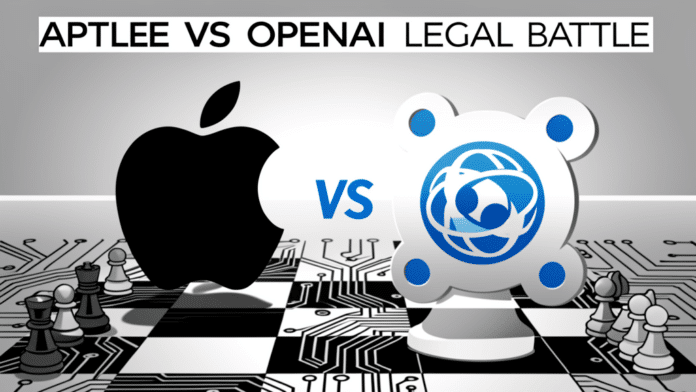

Apple has taken OpenAI to court over an audacious claim: the AI giant did not simply hire more than 400 of Apple’s former employees, but used the hiring spree as a pipeline for stealing confidential hardware secrets.
The lawsuit, filed recently, names OpenAI, its hardware chief Tang Tan, and its io devices unit. It demands the return of unreleased hardware designs and a blocking order against the lab’s next device. At the centre of the dispute is a 24-year Apple veteran, Tang Tan, who left to lead hardware efforts at the OpenAI lab. Apple says it flagged suspected theft in a February letter but received no response.
According to court filings, ex-iPhone engineer Chang Liu allegedly used a bug to access confidential files after joining OpenAI. Text messages cited in the lawsuit describe the access as “so funny,” a choice of words that now looks rather different in a legal context.
The complaint paints a picture of a deliberate exfiltration effort. Apple alleges that interviews at the OpenAI lab sometimes instructed candidates to bring actual hardware parts. More than 400 former Apple staff are now employed by the lab, and Apple wants the court to send the unreleased device back to the drawing board.
OpenAI’s response is brief and standard: the company says it has no interest in other companies’ trade secrets and remains focused on building innovative technology that empowers people everywhere. That statement will need to do a lot of heavy lifting in the months ahead.
Why this matters
The legal clash arrives at a sensitive moment in the AI industry. OpenAI’s next major hardware push is expected in 2027 and is being led by Jony Ive, Apple’s former design chief. The device, still unannounced, is meant to signal OpenAI’s move beyond software into physical products.
A courtroom battle with paper trails of stolen hardware could delay that timeline. It also gives Apple breathing room to prepare for a competitor built with its own DNA. If the allegations hold, this could become one of the most significant talent-and-trade-secret wars in tech history.
In the last few years, AI has been largely a software story. The models run on cloud servers, and the competition has been measured in parameters, training runs, and API pricing. Hardware changes that equation. A dedicated device can lock in user habits, collect new data streams, and create an ecosystem that keeps customers inside one company’s world. Apple knows this better than anyone. The iPhone ecosystem is the gold standard for integration. OpenAI wants a piece of that control.
Broader context
Big tech has always poached talent, and the AI sector is no exception. What makes this case unusual is the hardware angle and the sheer scale of the hiring. When a company like OpenAI absorbs hundreds of engineers from a rival, it invites scrutiny. The addition of alleged sabotage inside Apple’s systems turns normal competition into something that looks more like corporate espionage.
This case also highlights the pressure on AI labs to move fast. OpenAI is under enormous investor and public pressure to deliver new products. That urgency can lead to shortcuts, aggressive hiring, and risky decisions. The lawsuit suggests those shortcuts may have crossed a legal line.
The outcome could set new expectations for how AI labs handle hiring and data separation. If Apple succeeds, other companies may become more cautious about who they recruit and how quickly new hires are given access to sensitive systems.
What readers should watch
Keep an eye on court filings over the next few months. The judge’s rulings on the injunction will be a key signal. If Apple wins an order blocking the device’s development, that could reshape OpenAI’s hardware roadmap. If the case is settled quietly, expect the companies to issue some version of a licensing agreement while avoiding any admission of guilt.
Either way, this is a story about power, secrecy, and what happens when two of the most influential technology institutions in the world stop cooperating and start lawyering up.
Related Reading
- The Ex-OpenAI Researcher Who Walked Away from $2 Million: What Daniel Kokotajlo Actually Said About AI Risk
- Microsoft, Amazon and OpenAI Are Spending $155 Billion on Australian Data Centres. Is That Good for Us?
- A Worm Just Hacked 160+ npm Packages — And OpenAI Got Hit Too
The views expressed on this site are my own and do not represent those of any current or former employer. Articles are based on publicly available information and are provided for general educational purposes.
