

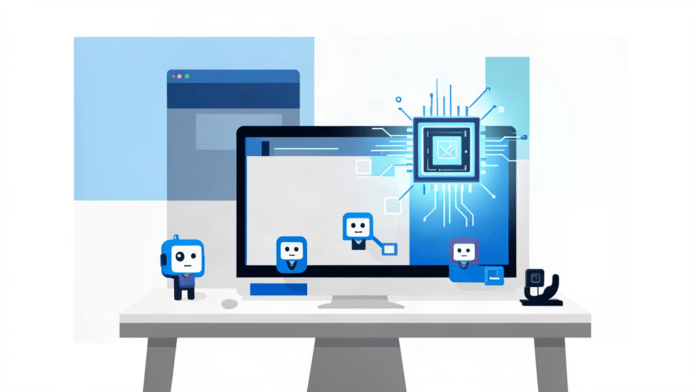

Microsoft has made its strongest case yet that it is building an AI future on its own terms. At Build 2026, the tech giant unveiled seven new in-house AI models, its first always-on agent, a quantum chip, and a new platform for agent-first devices. The message was clear: Windows and Microsoft 365 are becoming the control layer for the next generation of autonomous AI.
The centrepiece of the announcement was a family of seven Microsoft AI models, collectively known as MAI. These span reasoning, coding, image generation, voice, and transcription, and are available through Microsoft Foundry. The breadth signals that Microsoft is no longer content to rely on OpenAI for every AI capability in its stack.
Microsoft Scout, the company’s first “Autopilot” agent, is built on the OpenClaw framework and operates directly inside Teams. Scout can schedule meetings, prepare materials, and take proactive actions without waiting for a direct command. It represents Microsoft’s move toward ambient computing, where software anticipates needs rather than simply responding to requests.
On the hardware front, the Majorana 2 quantum chip drew significant attention. Designed with help from AI agents, the chip claims a 1,000x improvement in reliability over earlier designs. Microsoft suggested this could accelerate the timeline for a practical quantum machine to as early as 2029. The announcement underscored how AI is already reshaping research cycles in fields far beyond consumer software.
Project Solara, previewed at Build, is Microsoft’s upcoming platform for agentic devices. Concepts include a wearable badge and a desk companion designed to interact with AI agents throughout the day. These ideas point to a world where physical objects are always-on interfaces to intelligent systems, not just passive tools.
Microsoft also rounded out its hardware lineup with the Surface RTX Spark Dev Box, a compact PC built specifically for AI workloads. The device joins the recently revealed Surface Laptop Ultra in Microsoft’s push to bring AI-native hardware to both consumers and developers.
Why this matters
Build 2026 arrived just days after Nvidia’s own major AI announcements, and Microsoft was quick to align with the industry’s agentic theme. The company is also deepening its partnership with Nvidia on AI laptops and PCs.
With in-house models, an OpenClaw-based agent, and a new category of agent-first hardware, Microsoft is charting a bold course. After years of operating largely as OpenAI’s distribution partner, the company is now building the rails for the agent era itself. That shift has far-reaching implications for developers, enterprises, and anyone who works inside the Microsoft ecosystem.
Related Reading
- The Rise of Autonomous AI Voice Agents: What It Means When the Machine Calls for You
- Microsoft, Amazon and OpenAI Are Spending $155 Billion on Australian Data Centres. Is That Good for Us?
- DeepMind Chief Proposes U.S. AI Watchdog Before Frontier Models Hit the Market
The views expressed on this site are my own and do not represent those of any current or former employer. Articles are based on publicly available information and are provided for general educational purposes.
