

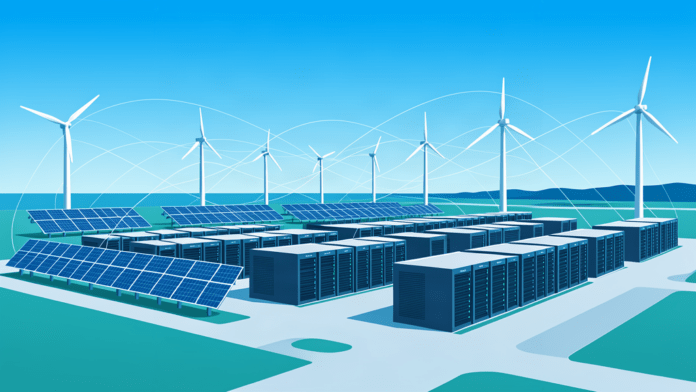

Australia is in the middle of the largest single build-out of digital infrastructure in its history. Between 2023 and 2025, companies announced plans for Australian data centres that could scale to more than A$100 billion in investment, and the federal government now treats large data centres as strategic national assets rather than merely commercial real estate. This report is written for government executives, CIOs, CISOs, technology leaders and policy makers who need a clear, evidence-based picture of what is happening, what is planned, and what it means for our electricity grid, our water, our economy and our security.
The brief is deliberately strict about separating what we know from what we project. Throughout, I distinguish confirmed facts, government policy, industry plans, expert opinion, probable scenarios and plain speculation. Where a figure is uncertain, I say so.
Part 1: The current state of AI infrastructure
Artificial intelligence, and in particular the training and serving of large models, is far more demanding than the cloud computing that preceded it. Three forces are at work.
First, AI computation is dense. Traditional enterprise workloads ran at roughly 8 to 12 kilowatts per server rack. Generative AI and GPU clusters now push racks to between 30 and 50 kilowatts, and advanced supercomputing configurations reach 600 kilowatts per rack. More heat per square metre means more power and more cooling.
Second, AI is continuous. A model being trained or served runs around the clock, not in bursts. That turns a data centre into a steady, inflexible electrical load that behaves more like a smelter than a commercial office park.
Third, scale. “Hyperscale AI” means campuses measured in hundreds of megawatts, not the tens of megawatts of a traditional enterprise facility. A single proposed campus in Western Sydney (the Mamre Road development) would reach 1.2 gigawatts, larger than the Tomago aluminium smelter, which makes it potentially the single largest electricity user in the country.
Worldwide, the United States leads, with the highest per-capita data centre consumption at around 540 kilowatt hours per person in 2024. China is building aggressively. Europe is constrained by power and permitting. The Middle East, Singapore and India are each racing to capture AI compute. Australia, with roughly 1.4 gigawatts of installed data centre capacity across about 162 operational sites, sits in a second tier but is punching well above its weight as an investment destination, ranking second globally (after the United States) for data centre investment attractiveness in 2024.
Part 2: Australia’s existing AI data centres
The live market is concentrated in Sydney and Melbourne, which host around 80 percent of national capacity. The major operators are a mix of global hyperscalers and domestic specialists.
| Operator | Type | Key Australian sites | Stated capacity | Energy source |
|---|---|---|---|---|
| NEXTDC (ASX: NXT) | Carrier-neutral colocation | Sydney S3 (80MW), S7 Eastern Creek (550MW+ planned), Melbourne M2 (120MW), M3 (225MW) | Portfolio 1.4GW+ planned | Corporate PPAs, 100% renewables target by 2030 |
| AirTrunk (Blackstone owned) | Hyperscale | SYD1, SYD2, SYD3 Huntingwood (400MW+), Melbourne MEL1/MEL2 (630MW+) | 755MW+ across Australia | ~80% renewable portfolio sourcing |
| CDC Data Centres | Sovereign, government-certified | Canberra, Sydney Eastern Creek, Melbourne Laverton (400MW+) | 780MW+ Victorian plan | Grid supplied, closed-loop liquid cooling |
| Equinix | Colocation | Sydney, Melbourne, Perth, Brisbane, Canberra, Adelaide | Multi-megawatt scale | Grid supplied |
| Digital Realty | Colocation / hyperscale | Sydney, Melbourne (5 facilities) | 17.4MW per new facility | Grid supplied |
| Microsoft | Hyperscale self-build | 3 operating, 3 under construction (Sydney, Melbourne) | Expanded 140% by 2029 | PPAs, biofuel backup |
| Amazon Web Services | Hyperscale self-build | Sydney Region (2012), Melbourne Region (2025) | A$20bn expansion to 2029 | 11 new solar projects, 1.4TWh/yr |
| Hyperscale | Sydney, Melbourne regions | Multicloud expansion | PPAs | |
| Oracle | Cloud | Sydney, Melbourne cloud regions | Growing | Grid supplied |
Most existing sites use a mix of air and water cooling, with newer AI-focused facilities moving to direct-to-chip liquid cooling. CDC operates a recirculating closed-loop system that drives operational water use toward zero. NEXTDC’s S7 campus in Eastern Creek, planned with OpenAI, was designed for up to 612 megawatts using direct-to-chip liquid cooling.
Part 3: Planned Australian AI data centres
The pipeline is enormous and accelerating. AEMO’s transmission connection queue for data centres grew from 5.4 gigawatts in the March quarter of 2026 to 9.0 gigawatts by the June quarter, of which 7.6 gigawatts remained at the application stage. For context, Australia’s entire operational data centre fleet is about 1.4 gigawatts, so the queue is more than six times current capacity.
Major announced commitments include:
| Company | Commitment | Period | Notes |
|---|---|---|---|
| Microsoft | A$25 billion | By end 2029 | Largest in its 40-year Australian history; ASD Cyber-Shield; skills program |
| Amazon Web Services | A$20 billion | 2025 to 2029 | Sydney and Melbourne; 11 solar projects; TS Cloud with Defence |
| Firmus (Project Southgate) | A$4.5 billion initial, up to A$73.3 billion | From Oct 2025 | Tasmania based, renewable powered |
| NEXTDC / OpenAI (S7) | A$7 billion | First phase 2027 | 612MW AI campus, Eastern Creek |
| CDC Laverton | A$2.7 billion | From Feb 2025 | 400MW+ Melbourne sovereign campus |
Foreign investment dominates. AirTrunk is owned by Blackstone, CDC by Infratil and the Future Fund, Equinix and Digital Realty are US listed, and the hyperscalers are all US headquartered. Sovereign AI proposals are emerging through Defence partnerships (the AWS Top Secret Cloud, valued at A$2 billion plus) and government-certified hosting frameworks. State governments are competing hard: New South Wales has endorsed 15 data centre projects worth A$51.9 billion through its Investment Delivery Authority, Victoria has a A$25 billion Sustainable Data Centre Action Plan, South Australia released its own Data Centre Strategy in 2026, and the Northern Territory has offered land for a 2 gigawatt gas-driven development.
Part 4: The Australian Government position
Federal policy has shifted from encouragement to conditionality. The National AI Plan, released in December 2025, positions Australia as a leading data centre destination while committing to national data centre principles developed with the states and territories.
On 23 March 2026, the government released its Expectations of data centres and AI infrastructure developers. These set five expectations: prioritising national interest and data sovereignty, supporting the energy transition (underwriting new renewables and paying full grid connection costs), sustainable and efficient water use, investment in Australian skills, and contribution to research and local innovation capability. Proposals not aligned with the expectations will not be prioritised in Commonwealth regulatory assessments.
In July 2026, the Prime Minister announced plans to legislate mandatory national standards, recasting large data centres as energy infrastructure. The core mechanism is a “net-generator” principle: developers must contribute at least as much firmed renewable capacity as they consume, via the Renewable Electricity Guarantee of Origin scheme, and hold firm contracts or face curtailment during grid stress. The AEMC’s large-load rule, expected in late 2026, sets a 30 megawatt threshold above which facilities must meet Generator Performance Standards.
On AI safety specifically, Australia moved from the Voluntary AI Safety Standard (10 guardrails, September 2024) to the Guidance for AI Adoption (six essential practices) in 2025, complemented by the Policy for the Responsible Use of AI in Government. In October 2025 the government confirmed it would not introduce a text and data mining copyright exception, requiring AI developers to licence local content. The Australian Artificial Intelligence Safety Institute is being established to respond to AI risks.
On critical infrastructure, data centres fall under the Security of Critical Infrastructure Act 2018, requiring asset registration and, for larger operators, risk management and cybersecurity obligations through the Cyber and Infrastructure Security Centre.
Part 5: Electricity demand
Confirmed fact: operational Australian data centres consumed about 3.9 terawatt hours in FY2025, roughly 2 percent of National Electricity Market grid-supplied electricity. That equals the annual use of more than 700,000 homes.
Under AEMO’s central Step Change scenario, demand grows about 25 percent per year to 2030, then slows to about 5.4 percent per year. The table below gives my estimates for the planning years requested, drawn from the Oxford Economics Australia modelling for AEMO.
| Year | Estimated consumption (TWh) | Approx continuous load (GW) | Share of NEM grid electricity |
|---|---|---|---|
| 2025 (actual) | 3.9 | 0.44 | 2% |
| 2027 (est) | ~5.9 | ~0.67 | ~3% |
| 2030 (Step Change) | 12.0 | 1.37 | 6% |
| 2035 (est) | ~15.6 | ~1.78 | ~8% |
| 2040 (est) | ~20.3 | ~2.32 | ~10% |
| 2050 (Step Change) | 34.5 | 3.86 | 12% |
Scenario range matters. Under the Green Energy Industries scenario, 2030 demand reaches 13.1 TWh. Under Progressive Change it is materially lower at 8.5 TWh. A rapid AI uptake sensitivity pushes 2030 toward 16.2 TWh. The largest demand-side uncertainty is simply how fast businesses adopt generative AI.
For comparison, the Tomago aluminium smelter draws about 950 megawatts. A single 1.2 gigawatt data centre campus would exceed it. Mining, rail and residential demand each dwarf current data centre load, but data centres are the fastest-growing component and are geographically concentrated in Sydney and Melbourne, where they already account for 4 percent of NSW and 2 percent of Victoria grid supply, rising toward 11 percent and 8 percent by 2030.
The 2026 Integrated System Plan “Higher Demand” sensitivity models an extra 39 TWh by 2050 from faster data centre growth, concentrated in South Australia, Sydney and Melbourne. Under that profile the net benefit of planned transmission more than doubles, suggesting the grid build pays for itself faster as large loads scale.
Part 6: Water requirements
Cooling is where water enters the picture. Evaporative cooling is water hungry but electricity light. Dry air cooling uses almost no water but draws more power. Closed-loop liquid cooling is highly efficient with near-zero operational water draw but carries higher capital cost.
| Cooling type | Typical PUE | Water use (L/kWh) | Trade-off |
|---|---|---|---|
| Evaporative | 1.15 to 1.30 | 1.5 to 2.5 | Low power, high potable water |
| Dry / fan air | 1.40 to 1.55 | ~0.0 | No water, high peak grid load |
| Closed-loop liquid | 1.10 to 1.25 | <0.05 | High efficiency, near-zero water, higher cost |
Confirmed fact: Australia’s data centres currently use about 5.5 gigalitres of water per year, less than 0.1 percent of national water consumption. In Sydney they use about 0.7 percent of metropolitan supply, in Melbourne about 0.2 percent. Industry estimates project direct water demand more than tripling to 17 gigalitres over five years, reaching 1.9 percent of Sydney’s supply and 0.9 percent of Melbourne’s by 2030.
The risk is local, not national. Sydney Water has received enquiries for single data centres requesting up to 40 million litres a day, equivalent to 16 Olympic pools daily, roughly 20 times a typical industrial customer. A Climate Council analysis warns that if traditional water-intensive cooling proceeds, sector demand could reach 250 megalitres per day by 2035, or 15 to 20 percent of Sydney’s drinking water. Water could become a limiting factor in Western Sydney specifically, which is also where drought risk is highest.
The government’s expectations require efficient cooling, preference for non-potable and recycled water, and transparent reporting. Whether these are sufficient is contested. The Water Services Association of Australia proposes mandatory reporting of PUE and WUE and recycled-water pathways, but the current expectations are guidance rather than enforceable standards.
Part 7: Australia’s energy options
Solar and wind
Solar and onshore wind are the cheapest new generation in Australia at A$1,400 to A$2,800 per kilowatt. They are variable and need firming. This is the government’s preferred path, and most operators already underwrite new renewable generation through power purchase agreements.
Hydro and pumped hydro
Existing hydro and Snowy 2.0 style pumped hydro provide firming, but sites are limited and long to build. Pumped hydro is a complement to, not a replacement for, generation.
Batteries
Grid-scale batteries are scaling fast and are central to firming variable renewables. Costs continue to fall. This is the most likely near-term firming partner for data centres.
Gas
Gas remains a transition tool and is favoured by Queensland and the Northern Territory for rapid data centre development. The federal government has warned that fossil-only data centres will not meet national standards, and it can use its powers over AEMO and the AEMC to block non-compliant grid connections.
Coal
Coal is retiring. About two-thirds of remaining coal plants are expected to close by the mid-2030s. It is not a future option for new load.
Nuclear: large reactors, SMRs, microreactors, fusion
Current federal policy (Labor government) maintains the legislative bans on nuclear power. The Coalition opposition has proposed lifting the bans to allow nuclear, including SMRs, as a 24/7 carbon-free option for AI loads.
The evidence, led by CSIRO and AEMO’s GenCost analysis, is clear that nuclear is currently the most expensive firmed option. GenCost 2025-26 estimates large-scale nuclear at about A$8,600 per kilowatt and SMRs at about A$22,700 per kilowatt, against A$1,400 to A$2,800 for solar and wind. There are no completed commercial SMR projects worldwide, so cost estimates carry high uncertainty. CSIRO states it would take at least 15 years after legal restrictions were removed before first nuclear generation in Australia, too slow to help 2030 targets. A Smart Energy Council model of the Coalition’s nuclear plan estimated A$116 billion minimum capital, potentially A$600 billion system-wide, delivering less than 15 percent of NEM needs by 2050.
Microreactors and fusion remain speculative for this century’s relevant planning window. Fusion in particular is not a credible contributor before 2050 under any mainstream scenario.
Part 8: Will Australians pay more?
This is the question households care about most. The short answer: under current policy design, the intention is that data centres do not push costs onto households, but the safeguards are not yet fully tested.
Electricity: Data centres currently pay 100 percent of their upfront connection and network augmentation costs. The Clean Energy Finance Corporation and others note this private underwriting has contributed to lower residential default offers. Microsoft has committed that its data centre electricity costs will not be passed to residential customers. Without additional renewable generation, analysis suggests data centre growth could lift wholesale prices 26 percent in NSW and 23 percent in Victoria by 2035, so the offsetting build-out of generation is the hinge.
Water: Operators are expected to cover their share of water infrastructure. The WSAA framework aims to prevent household water bill rises. Whether voluntary reporting and expectations are enough is debated; enforceable standards would be stronger.
Taxes and infrastructure: The stated policy is that transmission, generation and storage are funded by the developers through PPAs, connection charges and the net-generator mechanism, not by general taxpayers. Experts are divided on whether this holds if project timelines slip and the grid must expand ahead of load. The risk is real but currently managed by design rather than by proven track record.
Part 9: Opportunities for Australia
Australia has genuine advantages: abundant solar and wind, political stability, strong privacy law, proximity to Asian markets, international subsea cable landings, a skilled workforce, and critical minerals and rare earths relevant to the energy transition.
The opportunities are real but conditional. Australia could become a renewable-powered AI exporter and a regional compute provider, particularly if it solves the water and transmission constraints that bottleneck Sydney and Melbourne. Sovereign AI capability, hosting sensitive government and Defence workloads onshore, is a stated national goal and a point of differentiation from nations without Australia’s security posture. The constraint is not capital. It is the pace and coordination of grid, transmission and water delivery.
Part 10: Risks
The most material risks, with a qualitative assessment of likelihood and consequence:
| Risk | Likelihood | Consequence | Note |
|---|---|---|---|
| Energy shortages / grid strain in Sydney and Melbourne | High | High | Concentration plus slow transmission build |
| Water stress in Western Sydney | Medium | Medium | Local, drought exposed |
| Cyber attack on concentrated critical infrastructure | Medium | High | SOCI obligations apply |
| Community opposition / social licence loss | Medium | Medium | Water and diesel backup are flashpoints |
| Foreign ownership / national security exposure | Medium | High | Most capacity foreign owned |
| Supply chain and geopolitical dependence | High | Medium | GPUs, transformers, skills |
| Over-concentration of AI infrastructure in two cities | High | Medium | Resilience and regional policy tension |
The grid-instability and supply-chain risks rate highest on a likelihood-times-consequence view. Environmental concerns and community opposition are manageable with the right cooling and engagement, but they are not solved yet.
Part 11: Global technology roadmap
AI infrastructure will change shape over the coming decades. The trajectory, framed as probable rather than certain:
| Year | Likely state of AI infrastructure |
|---|---|
| 2026 | GPU clusters dominate; liquid cooling mainstreaming; PUE ~1.2 to 1.4 |
| 2030 | AI ~70% of new data centre capacity; optical interconnects; early photonic and neuromorphic research |
| 2035 | More efficient accelerators; advanced cooling (immersion, two-phase); quantum annealing for specific workloads |
| 2040 | Wider photonics adoption; autonomous operations; mature edge where latency demands it |
| 2050 | Potential early orbital or lunar demonstrators; quantum possibly broader but still niche |
Hardware efficiency (Koomey’s Law) has historically doubled compute per kilowatt-hour every 1.5 to 2.3 years. That efficiency is why AI energy demand may peak lower than raw compute growth suggests, at least in the near term. It is also why overstatement of demand is a real forecasting risk: efficiency gains could outrun adoption.
Part 12: AI in space
Will AI infrastructure move into orbit? The evidence base here is early and should be read as long-range speculation unless stated otherwise. NASA, ESA, IBM and startups such as Starcloud have demonstrated small in-orbit compute nodes, and in 2025 a company trained a small language model in space. ESA has modelled satellite-to-satellite data centre concepts. The US and China are both researching orbital and lunar data infrastructure.
Advantages are real: abundant space-based solar power, passive radiator cooling, and low-latency processing of Earth observation data. Disadvantages dominate for now: launch cost, radiation hardening, maintenance difficulty, and the energy cost of moving data. Economically, orbital data centres are not viable for general compute this century under current launch economics. The most likely path is niche, defence and scientific workloads (secure processing, Earth observation, deep space support) with commercial adoption, if any, in the 2030s as demonstration only. This is speculation, not policy.
Part 13: Strategic forecast
Four scenarios for Australia to 2040, with confidence levels.
| Scenario | Electricity | Water | AI adoption | National security | Confidence |
|---|---|---|---|---|---|
| Most likely | 12 to 20 TWh by 2040, renewables led | Managed via recycling and dry cooling | Strong, business led | Sovereign enclaves grow | Medium |
| Optimistic | Green Energy Industries path, 13+ TWh, surplus renewables | Near-zero operational water | Regional hub status | Strong sovereign AI | Low |
| Conservative | Progressive Change, ~8 TWh | Modest growth | Slower uptake | Dependent on foreign clouds | Medium |
| Worst case | Grid strain, price spikes, stalled builds | Western Sydney stress | Concentration risk realised | Foreign control exposure | Low |
Final executive assessment
Five things every Australian should understand
1. Data centres are now strategic national infrastructure, not just server farms.
2. They currently use about 2 percent of grid electricity and could reach 10 to 12 percent by 2050.
3. Water is a local risk in Western Sydney, not a national one, if cooling is done right.
4. Under current policy, developers, not households, are meant to pay for the grid and water they need.
5. Nuclear is not a near-term answer: CSIRO rates it the most expensive firmed option and at least 15 years away.
Five things every business leader should prepare for
1. Power and water access will shape where AI workloads can run.
2. Sovereign and secure compute options are expanding via Defence and government-certified hosts.
3. Expect stricter sustainability and reporting expectations as a licence to operate.
4. Grid connection queues are long; plan capacity years ahead.
5. Efficiency, not just scale, will determine your AI cost curve.
Five recommendations for the Australian Government
1. Convert the data centre expectations into enforceable national standards with the states.
2. Align transmission and REZ delivery timelines with the connection queue to avoid stranded load.
3. Mandate WUE and PUE reporting, and recycled-water pathways, as a condition of approval.
4. Keep the net-generator principle and firm-contract requirement, with AEMO curtailment backed by law.
5. Invest in sovereign AI capability and skills so dependence on foreign clouds does not become a single point of failure.
Five recommendations for energy companies
1. Treat data centres as anchor off-takers for new renewable and storage projects via long PPAs.
2. Plan firming and transmission for steady, inflexible 24/7 loads.
3. Offer recycled-water and dry-cooling incentives in water-stressed regions.
4. Engage early with developers to sequence generation, storage and connection together.
5. Build the workforce and supply chain (transformers, cables) that the build-out requires.
Five recommendations for CIOs and CISOs
1. Map where your AI workloads will run and secure sovereign or certified options for sensitive data.
2. Bake SOCI and critical-infrastructure obligations into provider selection.
3. Plan for power and water constraints in your infrastructure roadmap, not just latency and cost.
4. Demand transparency on provider sustainability and resilience posture.
5. Diversify across regions and providers to reduce concentration risk.
Balanced conclusion
Australia is unusually well positioned to benefit from the AI era. We have the renewables, the stability, the skills and the investor appetite. The opportunity is real, but it is conditional on coordination. The single greatest risk is not lack of capital. It is the mismatch between how fast data centres can connect and how slowly transmission, generation and water infrastructure are delivered. Get that sequencing right, and Australia can capture productivity gains and become a trusted regional AI host. Get it wrong, and we inherit higher prices, water stress and foreign-controlled concentration.
The next two decades will be defined by whether governments, utilities and operators build the enabling infrastructure in step with the load. The policy frame is now pointing the right way. Execution is the open question.
Sources include the AEMO 2025 Inputs, Assumptions and Scenarios Report and the Oxford Economics Australia data centre energy demand study, the CSIRO and AEMO GenCost 2025-26 analysis, the Department of Industry’s National AI Plan and data centre expectations, the IEA Energy and AI report, and company disclosures from Microsoft, Amazon Web Services, NEXTDC, AirTrunk, CDC, Oracle and Equinix. Full citations are embedded throughout.
Related Reading
- 3.1 Agent-Workdays Per Human Day: Inside OpenAI’s Push to Self-Improving AI
- Copilot Studio and Power Platform: Securing Enterprise AI Agents at Scale
- The Myth of Killer AI: Regulatory Capture, Genuine Alarm, or Both?
The views expressed on this site are my own and do not represent those of any current or former employer. Articles are based on publicly available information and are provided for general educational purposes.
