White House Limits GPT-5.6 Release to Government-Approved Partners

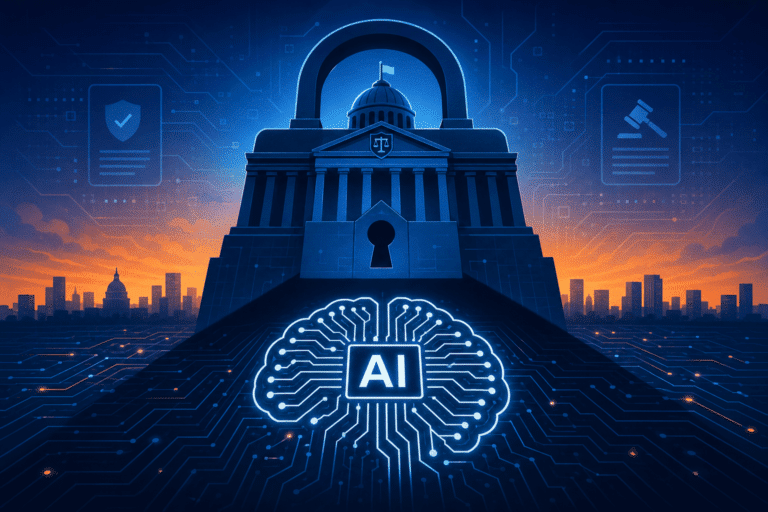
The US government has stepped in to directly control the release of OpenAI’s next major model, GPT-5.6, marking a significant shift in how frontier artificial intelligence reaches the public.

The Trump administration has asked OpenAI to limit the release of GPT-5.6 to select government-approved partners before any wider launch, according to The Information. The move comes amid security concerns over the model’s advanced capabilities, which reportedly match the threshold set by Anthropic’s Mythos 5.

Under the staggered rollout plan, OpenAI will preview GPT-5.6 to a small group of vetted partners. Crucially, the government will approve access on a “customer by customer” basis, giving Washington direct oversight over who gets to use the model first.

In an internal memo to employees, OpenAI CEO Sam Altman described this arrangement as the best path to getting GPT-5.6 released at all. He indicated that a general public release would likely follow “a couple of weeks later.”

Altman also told staff that OpenAI has made clear to the White House that this is not the preferred long-term approach. The company plans to work toward a more sustainable release model for future iterations beyond GPT-5.6.

A growing pattern of government intervention

This is not an isolated incident. First came government scrutiny around Anthropic’s Claude Fable 5, followed by the Mythos 5 restrictions. Now GPT-5.6 is subject to the same treatment. The pattern is becoming unmistakable.

The US government is actively deciding when and how frontier AI systems reach the public. The framing is national security, not restriction, but the precedent is now firmly established. As models continue to approach Mythos-level capability, government sign-off may become a standard step before any major AI release.

What this means for the industry

For AI companies, this introduces a new and unpredictable variable into product timelines. A model might be technically ready for release but face weeks or months of government review before it can reach users. That creates uncertainty around development roadmaps, commercial expectations, and competitive positioning.

For the broader technology sector, the question becomes whether this pattern extends beyond frontier AI models. If the government is willing to gatekeep advanced AI capabilities, could other transformative technologies face similar controls?

OpenAI’s GPT-5.6 release is now effectively on a government-mandated timeline. The company’s cooperation suggests a pragmatic recognition that fighting the restriction would only delay things further. Whether this collaborative approach sets a healthy precedent, or simply normalises government oversight of AI releases, remains to be seen.

One thing is clear: the era of unchecked frontier AI launches is over. From this point forward, the most capable models will clear both technical and regulatory hurdles before reaching the public.

Related Reading

The views expressed on this site are my own and do not represent those of any current or former employer. Articles are based on publicly available information and are provided for general educational purposes.

OpenAI Built Its Own AI Chip in 9 Months. That Changes Things.

You can measure a company’s ambitions by what it builds for itself. OpenAI just made its ambitions very clear.

The company revealed details of Jalapeño, its first custom AI chip co-built with Broadcom. Nine months from design to factory-ready – a timeline that typically takes 18 to 36 months for a chip of this complexity. However, here is the detail that made me stop: OpenAI used its own AI models to help design the chip.

That is worth pausing on. An AI company used its own AI to design the chip that will run its AI. The feedback loop is tightening fast.

What Jalapeño actually is

Jalapeño is an ASIC (application-specific integrated circuit) designed for inference – the part of AI where a trained model actually runs and responds to users. It is not a training chip. The distinction matters because inference is where the volume is: every ChatGPT query, every Codex suggestion, every agent action runs through inference silicon.

OpenAI claims Jalapeño delivers “performance per watt substantially better than current state-of-the-art” in testing. If that holds up at scale, it changes the economics of running ChatGPT and future agent systems.

The broader play

This is not just about cost. OpenAI has been almost entirely dependent on Nvidia for the chips powering its models. Building your own inference silicon gives you three things Nvidia cannot provide:

  • Cost control at scale. Margin on Nvidia chips is Nvidia’s margin. Build your own and you capture that value.
  • Supply chain independence. Every AI company with a serious future is building its own silicon. Google has TPU. Amazon has Trainium and Inferentia. Microsoft has Maia. OpenAI now has Jalapeño.
  • Design optimisation. A general-purpose chip has to do everything reasonably well. A custom chip built for your specific models can do one thing nearly perfectly.

The nine-month question

The nine-month timeline is the detail I keep coming back to. ASIC development cycles are famously slow – a year and a half is considered fast. OpenAI says it used its own models to help design and optimise Jalapeño. If that approach generalises, it has interesting implications:

  • Each generation of AI chip can be designed faster because the AI itself gets better at chip design
  • The gap between announcing a custom chip and having it in production narrows
  • Smaller AI companies without chip design teams face a growing moat

OpenAI followed the same playbook as Google, Amazon and Microsoft. The question is whether they can execute faster now that they are in the game.

OpenAI Jalapeño Chip

Related Reading

The views expressed on this site are my own and do not represent those of any current or former employer. Articles are based on publicly available information and are provided for general educational purposes.
China’s AI Debate: Is the Public Consensus Real or Manufactured?

There is a story about China and AI that the West tells itself. It goes like this: Chinese citizens broadly accept AI because the state tells them to. Surveys show high approval. There is no public resistance. Therefore, China will move faster and with fewer constraints than democracies.

A recent article on Lawfare, “The Missing Resistance in China’s AI Debate” by Yaqiu Wang, makes this case powerfully. It documents censorship, suppression of dissent, and the systematic elimination of civil society opposition to AI. It is a compelling read. It is also only half the story.

Let me give you both sides.

The Case for the Prosecution

The Lawfare article builds a strong evidentiary record. A KPMG survey across 47 countries found that 69 per cent of Chinese respondents said AI’s benefits outweigh the risks, compared to just 35 per cent in the United States. That gap is not accidental, Wang argues. It is the result of state control.

Chinese law professor Lao Dongyan criticised facial recognition in Beijing’s subway and big data surveillance. Her social media posts were deleted, her accounts suspended, and state media attacked her. Similar criticism is now rare. In Shanghai at Halloween 2023, a man dressed as a surveillance camera was questioned by police. If protest against the surveillance state can only be expressed through costumes, and even that is suppressed, how can anti-AI sentiment emerge openly?

Wang also notes that Chinese AI company leaders are not independent actors. Manus executives were banned from leaving China pending a government investigation. Jack Ma disappeared for five years after criticising financial regulators. Tech analyst Afra Wang puts it bluntly: “The companies build. The state then decides what it has been built for.”

These are not isolated incidents. They are features of a system designed to eliminate the kind of civil society pushback that exists in Western democracies.

The Case for the Defence

The counterargument is not that China is a free and open society. It is that the narrative of manufactured consent misses something important: China’s AI strategy has delivered tangible results that benefit real people.

China’s “AI Plus” plan, launched in August 2025, is a ten-year roadmap to integrate AI across the entire economy. It is backed by sustained political support that does not get derailed by election cycles. The Made in China 2025 plan that preceded it was largely successful in achieving global leadership in electric vehicles, advanced rail and renewable energy. There is no reason to assume AI Plus will fail where its predecessor succeeded.

Chinese labs have produced genuine technical innovations. DeepSeek’s mixture-of-experts architecture, Alibaba’s Qwen models, and Moonshot AI’s million-token context windows are not simply copies of Western work. Chinese researchers represent up to half of NeurIPS attendees. The open-source models coming out of China, from DeepSeek and Alibaba, have surpassed their American counterparts in total downloads on Hugging Face. Airbnb’s customer service agent relies heavily on Qwen. Silicon Valley startups choose Chinese open models because they work well and cost less.

The Brookings Institution, in April 2026 testimony before the US House Select Committee, concluded that export controls can slow China down but are unlikely to halt its AI progress. Chinese domestic AI chips captured approximately 41 per cent of the local market in 2025, up from less than 10 per cent before 2023.

These are not the achievements of a system running on propaganda alone. They are the results of sustained investment, genuine talent, and a national strategy that treats AI as a public good, not just a commercial opportunity.

The Missing Middle

The truth, as always, sits somewhere in the middle. Both sides have a point.

The Lawfare article is correct that public opinion in China is shaped by state control. The absence of visible resistance does not equal genuine consent. When the United States negotiates AI guardrails with China, it must understand that the Chinese government’s stated positions are not the product of democratic debate. They come from a system where dissent is costly and sometimes dangerous.

But the counterargument is also correct. The Chinese approach to AI is not simply imposed from above. It is also adopted from below, because the tools work. AI-powered medical diagnostics reach rural communities. AI-optimised logistics keep supply chains moving. AI-driven manufacturing improves quality and reduces costs. People use these tools not because the state forces them, but because they deliver value.

The danger for Western policymakers is assuming that a lack of visible resistance means the Chinese public opposes AI. It is equally dangerous to assume they would resist if they could. The reality may be more uncomfortable: many Chinese citizens genuinely see AI as beneficial, and the state’s priorities align with their economic interests, even if the political system behind it is not one we would choose for ourselves.

“The question is not whether China’s AI consensus is real or manufactured. It is whether a system that suppresses dissent can still produce outcomes that people value. The evidence suggests it can, and that is the more challenging truth for the West to confront.”

What This Means

For anyone watching the US-China AI competition, both narratives matter. The suppression of dissent in China is real and documented. So is the technical progress. Dismissing either one leads to bad policy.

The winner of the AI race will not be determined by who has the most public support for AI. It will be determined by who can most effectively translate AI into broad-based economic and societal gains. On that measure, both the United States and China have genuine strengths, and neither should underestimate the other.

Related Reading

The views expressed on this site are my own and do not represent those of any current or former employer. Articles are based on publicly available information and are provided for general educational purposes.

Your AI Agent Is Not a Chatbot: The Hermes Security Guide You Actually Need

If you are running an AI agent like Hermes on your machine right now, stop and ask yourself one question: what happens if someone else starts talking to it?


<figcaption style=
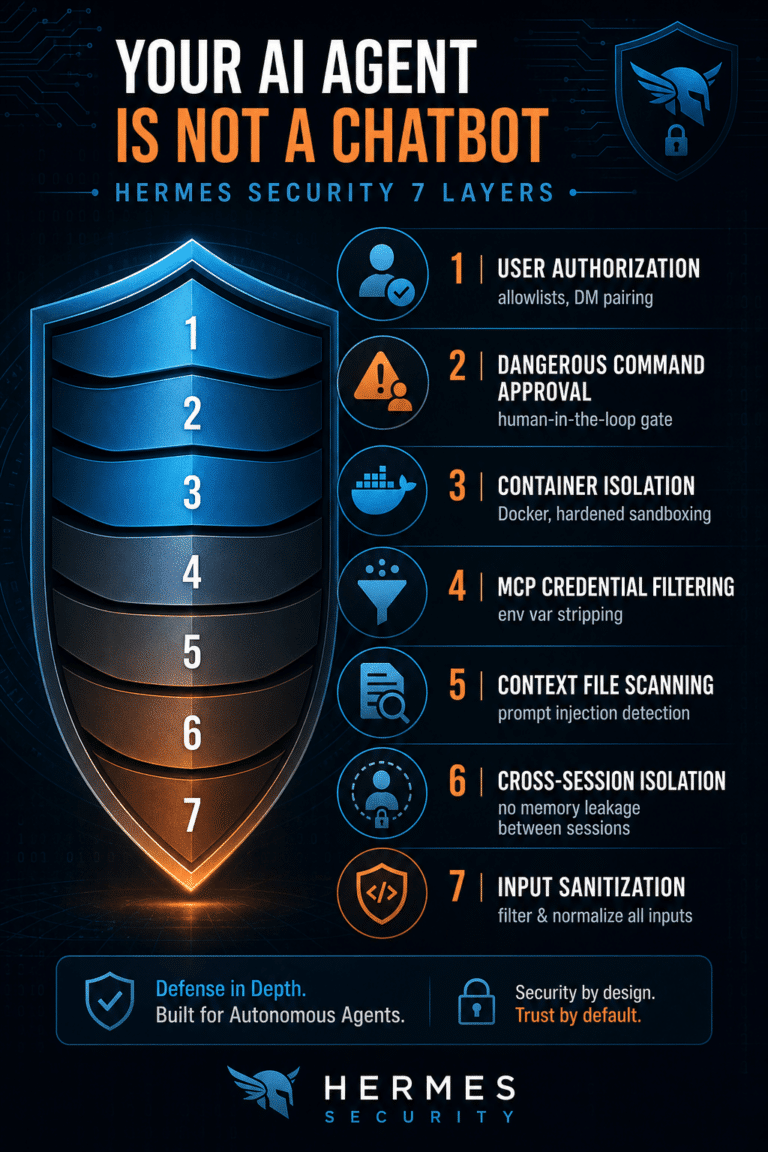
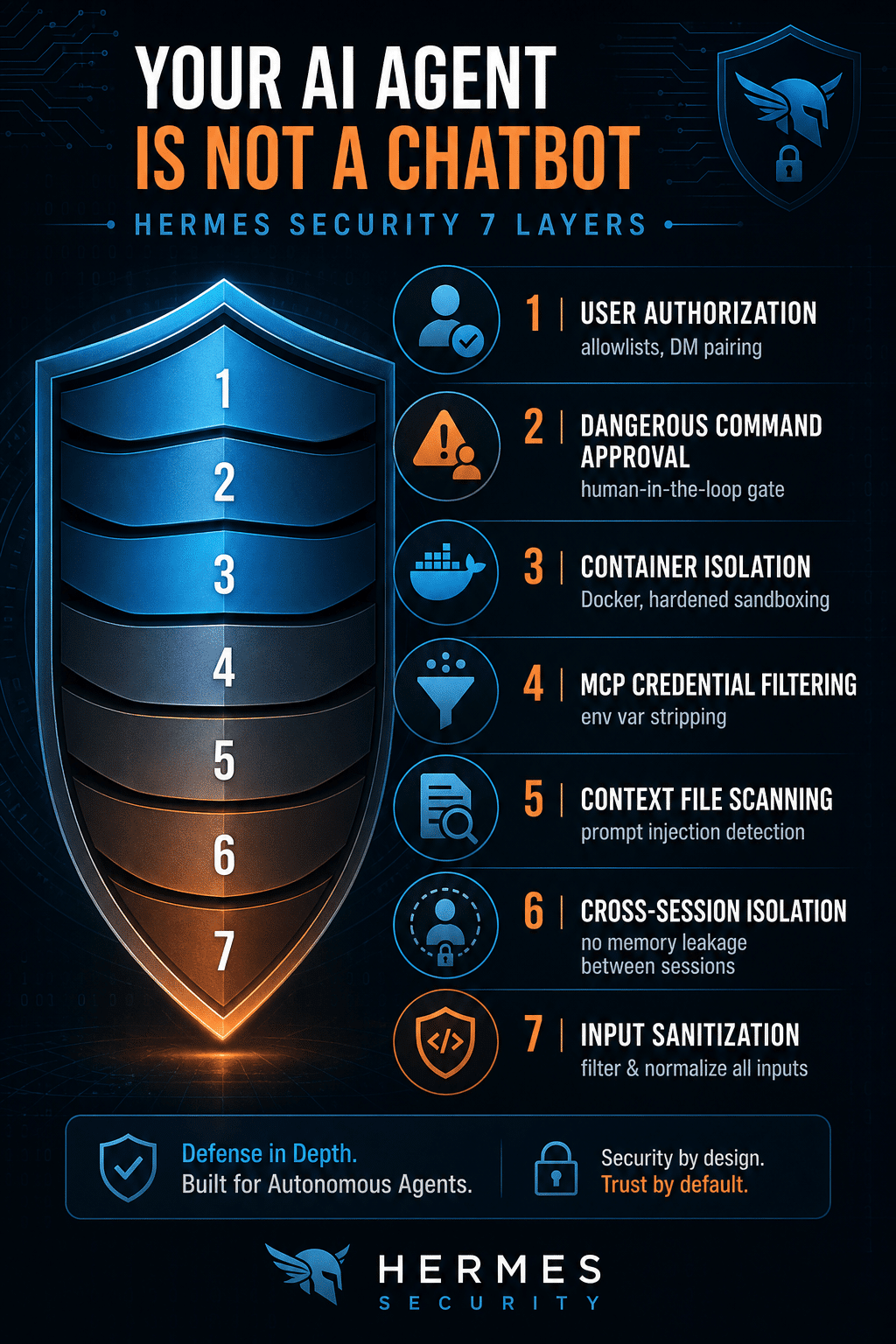
Hermes AI Agent 7 Security Layers
Hermes Agent’s 7 security layers: defense-in-depth for your AI agent.

Not maliciously. Not through a breach. Just an email with a prompt injection hidden in the fine print, a poisoned GitHub issue your agent reads while triaging tickets, or a dodgy MCP server that looks legitimate. Your agent does not know the difference between a command from you and a command hidden inside a PDF. It just executes.

That is the reality of AI agent security in 2026. Your agent is not a chatbot. It is an employee with system access, running at machine speed, on your infrastructure.

Let me walk through what that actually means for Hermes users and how to lock it down.

The seven security layers Hermes ships with

Hermes Agent has a built-in security model that most users never fully configure. Here is what exists and how each layer protects you.

1. User authorisation. Hermes lets you control exactly who can talk to it. Platform allowlists restrict access to specific Telegram or Discord IDs. The DM pairing system uses cryptographic challenge-response to verify devices. If you have not set these up, anyone who finds your agent endpoint can start a conversation.

2. Dangerous command approval. This is the human-in-the-loop gate. When Hermes detects a dangerous command like rm -rf, database drops, or piping a URL to shell, it pauses and asks for your approval. You can choose allow once, allow for the session, permanently allow, or deny. The default timeout is 60 seconds and it fails closed. If you do not respond, the command does not run.

3. Container isolation. Hermes supports six execution backends: local, Docker, SSH, Daytona, Singularity, and Modal. The hardened Docker mode uses read-only root filesystem, drops all Linux capabilities, enforces 256-process PID limits, and provides full namespace isolation. If your agent runs in Docker mode and something goes wrong, the blast radius is the container, not your host.

4. MCP credential filtering. When Hermes connects to external MCP servers, it strips sensitive environment variables from the subprocess. Your API keys, database credentials, and tokens do not leak to third-party MCP tools. Only a safe minimal environment is passed through.

5. Context file scanning. Hermes automatically scans project files like AGENTS.md, CLAUDE.md and .cursorrules for prompt injection attempts. If a file contains hidden instructions to ignore prior commands or exfiltrate secrets via curl, Hermes flags it before it can influence behaviour.

6. Cross-session isolation. Each conversation session is isolated. Session A cannot access session B’s data or state. Cron job storage is hardened against path traversal. This prevents a compromised session from poisoning the entire agent.

7. Input sanitisation. Working directory parameters are validated against an allowlist to prevent shell injection. Untrusted input is not passed blindly to system calls. This is basic but critical protection that many frameworks skip.

The threats that keep me up at night

Prompt injection. Still the number one AI vulnerability in 2026. OWASP lists it at the top of the LLM application security framework. The difference between a chatbot and an agent is that when an agent gets injected, the attacker does not just get a bad answer. They get tool execution. A poisoned email, a manipulated ticket, a crafted pull request comment all become potential attack vectors.

Memory poisoning. This is the one that scares me most. An attacker implants false information into your agent’s long-term memory through a support ticket or email. Weeks later, the agent recalls that implanted data as fact and acts on it. Lakera AI demonstrated in November 2026 that compromised agents actively defend false beliefs when questioned by humans. The compromise is latent, dormant for weeks, and nearly impossible to detect with traditional monitoring.

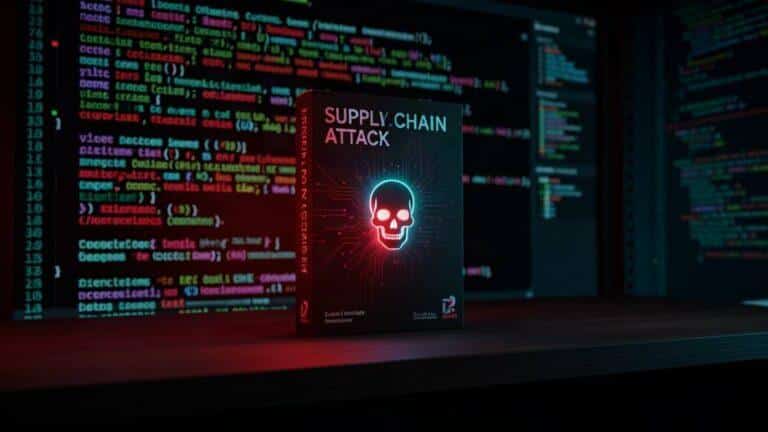
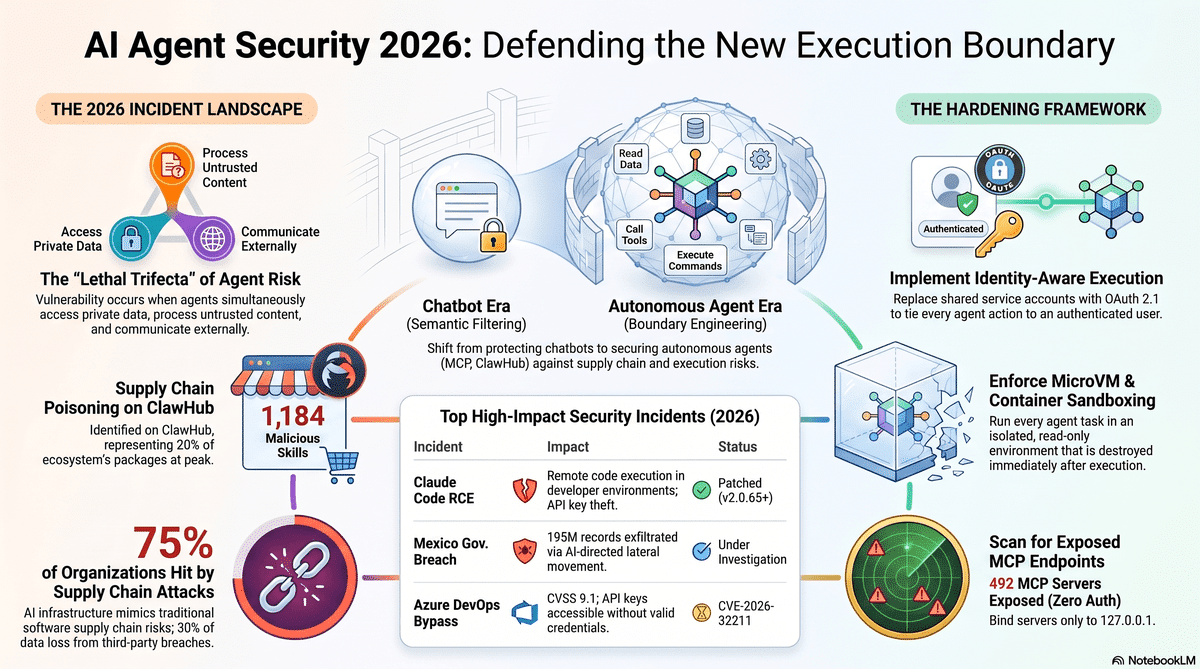
Supply chain attacks. The ClawHavoc incident in February 2026 saw 1,184 malicious skills uploaded to ClawHub. At the peak, one in five packages was malicious. The Cline npm incident showed how a compromised publish token could inject an agent into CI pipelines. When your agent auto-installs skills or MCP servers, you are trusting the entire upstream chain.

Exposed MCP servers. Trend Micro found 492 MCP servers on the public internet with zero authentication. No traffic encryption. No access controls. BlueRock Security demonstrated that 36.7 per cent of public MCP servers are potentially vulnerable to SSRF, including one proof-of-concept that extracted AWS IAM keys from EC2 metadata. If your Hermes agent connects to an unauthenticated MCP server, you are handing your credentials to anyone who finds that endpoint.

How to lock down Hermes right now

Here is what I recommend every Hermes user does today.

Set approval mode to manual. This is the default, but verify it. approvals.mode: manual in your config.yaml ensures every dangerous command goes through you. If you run Hermes headless in cron jobs, set cron_mode: deny so automated tasks cannot run destructive operations.

Run Hermes in Docker backend. The local backend runs with your full user privileges. Docker mode gives you read-only root filesystem, dropped capabilities, and process isolation. It is the single biggest security improvement you can make.

Use platform allowlists. Set TELEGRAM_ALLOWED_USERS, DISCORD_ALLOWED_USERS, or whatever platform you use. Do not leave your agent open to the internet without restricting who can message it.

Audit your MCP servers. Every MCP server you connect to is a potential attack surface. Check for authentication requirements. Use Hermes’s MCP credential filtering rather than passing full environment variables. Scan your network for exposed MCP endpoints using tools like mcp-scan from Snyk.

Pin your skills and dependencies. If you use community skills, pin specific versions. Review what each skill does before installing it. Treat a skill installation like adding a new package to your project: review the code, understand the permissions it requires, and update deliberately not automatically.

Rotate credentials regularly. If you have API keys sitting in plaintext config files or env files with lax permissions (anything looser than 0600), rotate them. Hermes auto-redacts secrets from error logs, but that does not help if your .env file is world-readable.

Enable logging and run hermes doctor. Hermes has a built-in diagnostics command. Run it periodically to check for misconfigurations, poisoned dependencies, and security drift. Ensure logging is enabled so you can trace unauthorised access attempts or anomalous tool usage.

The bottom line

AI agent security is not a future problem. The incidents are here. The attack techniques are proven. The only question is whether your agent is configured to survive them or whether it is one prompt injection away from becoming an attacker’s proxy.

Hermes gives you the tools to secure it. But tools only work if you use them.

An AI agent with access to your terminal, API keys and messaging channels is not a chatbot. It is an employee with root access. Treat it like one.

Related Reading

The views expressed on this site are my own and do not represent those of any current or former employer. Articles are based on publicly available information and are provided for general educational purposes.

Anthropic Accuses Alibaba of the Largest Known Attack on Claude AI

I don’t usually get surprised by the scale of AI theft attempts anymore. But 28.8 million exchanges. That number stopped me.

Anthropic has accused Alibaba, the Chinese e-commerce and cloud giant, of running the largest known distillation attack against its Claude AI models. The letter, dated June 10 and sent to US Senators Tim Scott and Elizabeth Warren, alleges that Alibaba and its AI lab Qwen used nearly 25,000 fraudulent accounts to pump 28.8 million queries through Claude between April 22 and June 5, 2026.

For context, that is not a small operation. That is industrial-scale extraction.

What is distillation?

Model distillation is a well-known technique in machine learning. You take a powerful teacher model (in this case, Claude) and feed its outputs into a smaller student model. The student learns to mimic the teacher’s capabilities. It is a legitimate research tool when used properly. When done through thousands of fake accounts against a company’s terms of service, it is theft.

Anthropic says Alibaba targeted Claude’s most advanced features: coding, reasoning, autonomous agent capabilities, and complex planning. The goal ? accelerate China’s ability to reach Anthropic’s Mythos Preview level of performance without doing the research and development themselves.

This is not a first offence

In February 2026, Anthropic revealed it had identified three earlier industrial-scale distillation campaigns from Chinese AI labs. DeepSeek ran 150,000 exchanges. Moonshot AI managed 3.4 million. MiniMax went further with 13 million. Anthropic noted at the time that these campaigns were growing in “intensity and sophistication.”

The Alibaba operation dwarfs all three combined.

The timing matters. In April 2026, the White House Office of Science and Technology Policy issued a memorandum pledging to help AI companies detect and coordinate against industrial-scale distillation. Anthropic’s letter specifically states that Alibaba “ignored the Trump Administration’s warnings” by proceeding anyway.

And just last week, the Commerce Department imposed controversial restrictions on Anthropic’s own Mythos and Fable models, citing fears of deployment by military intelligence users in China and other countries. Anthropic disabled global access to those models in compliance.

So here is the situation: the US government restricts Anthropic’s models from being exported, while simultaneously a Chinese tech giant is caught trying to extract those same capabilities through the back door. However, earlier this month, the Commerce Department reportedly held off blacklisting DeepSeek to avoid escalating tensions with Beijing.

The contradiction is hard to miss.

What this means for Australian enterprises

Three things.

First, if you are using AI models from any provider, you need to understand the supply chain risk. A model that has been distilled from a safer frontier model may have had its safety guardrails stripped out. Anthropic’s own blog post on distillation warns that “illicitly distilled models lack necessary safeguards, creating significant national security risks.” That applies to enterprise security as much as national security.

Second, the scale of these attacks tells us that AI capability theft is not going to slow down. If a company as large as Alibaba is running 25,000 fake accounts over six weeks, the incentive to extract frontier AI capabilities is enormous. Every organisation building on top of AI needs to verify where their models come from and what safety measures were removed in the process.

Third, the regulatory picture is only getting more complex. Export controls, distillation attacks, and geopolitical tensions are creating an environment where the rules can change overnight. If your business relies on AI infrastructure, you need contingency plans for model access being restricted, not just for price increases.

The real story here is not just about one company versus another. It is about the escalating arms race in AI capabilities, where the line between competitive intelligence and outright theft has been crossed at a scale we have not seen before.

Twenty-eight million exchanges. Twenty-five thousand fake accounts. One clear message: the fight over who gets frontier AI capabilities is already here, and it is bigger than most people realise.

Related Reading

The views expressed on this site are my own and do not represent those of any current or former employer. Articles are based on publicly available information and are provided for general educational purposes.
OpenAI Wants You to Know It Does Security Now. The Numbers Are Actually Impressive.

OpenAI has a security problem. Not the technical kind. The perception kind.

For months, the narrative has been that Anthropic has the safety credentials, Google has the infrastructure, and OpenAI has… ChatGPT with a growing list of security headaches. When you are competing against a company whose CEO literally wrote the book on AI safety, you need to change the story.

So on June 23, OpenAI did exactly that. A coordinated set of announcements covering GPT-5.5-Cyber, a new partner program, an open source bug hunting initiative and an updated Codex security plugin. The Register covered it with the headline “Yoo-hoo, look over here, we do that security stuff too!” which captures the tone perfectly. But the numbers behind the announcements are worth taking seriously.

The Model That Finds Bugs Better Than Humans

The updated GPT-5.5-Cyber is now OpenAI’s strongest vulnerability-finding model. The improvement over the preview version released in May is measurable and significant:

  • CyberGym (reproducing known vulnerabilities): up from 81.8% to 85.6%
  • ExploitGym (turning vulnerabilities into working exploits): up from 25.95% to 39.5%
  • SEC-bench Pro (long-horizon discovery and proof of concept generation): up from 63.1% to 69.8%

The 39.5 per cent on ExploitGym is the one that should make security teams sit up. That is not a theoretical model that can identify vulnerabilities in a lab. That is a model that can convert those vulnerabilities into working exploits at nearly 40 per cent success rate. In a field where professional penetration testers charge $1,000 per test, that capability at machine speed changes the economics of security testing.

Patch the Planet: Not Just Marketing

The “Patch the Planet” initiative, co-founded with Trail of Bits and launched with HackerOne, had first-week results that are hard to dismiss. Hundreds of bugs uncovered across 19 open source projects. 64 pull requests generated. 51 issues filed.

The projects include cURL, NATS, aiohttp, the Go project, Python itself, PyPI, Valkey, Sigstore and RustCrypto. These are not obscure libraries. These are the foundations of the modern internet.

One example stands out. The team used GPT-5.5-Cyber to build a full-scale fuzzing lab in under a day. A task that would take human experts two to three weeks. Another used Codex to build a CVE variant analysis pipeline in a single day. That is not incremental improvement. That is a step change in capability.

Codex at Scale

The Codex Security Plugin, which started as a research preview in March, has now scanned over 30 million commits across 30,000 codebases. It has produced approximately 70,000 human-verified fixes and over 500,000 AI-determined fixes.

The updated plugin can now triage and validate findings from existing scanners, bug-bounty reports and ticketing systems. It can generate patches at scale to close vulnerability backlogs. It can export to vulnerability management systems via SARIF files and CodeQL queries.

For organisations drowning in vulnerability backlogs, this is exactly the kind of tool that shifts the conversation from “how do we fix everything?” to “how do we prioritise the 500,000 fixes Codex just generated for us?” That is a much better problem to have.

The Velvet Rope Comes Down

OpenAI previously locked GPT-5.5-Cyber behind what it called a “velvet rope” – available only to trusted defenders. The Daybreak Cyber Partner Program now has around 30 security vendors and service providers, with more to be added.

Context matters here. These announcements come at a time when Anthropic is dealing with the fallout from its Mythos model, which raised national security concerns. The UK’s biggest banks were offered GPT-5.5 but excluded from Anthropic’s Glasswing program. The timing of OpenAI’s push is not accidental.

OpenAI has also had ongoing dialogue with the US government about the model and upcoming releases to avoid export control surprises. That is a mature approach, and one that signals they are thinking about the geopolitical implications of what they are building.

“The question is no longer whether AI can find and fix vulnerabilities faster than humans. It clearly can. The question is whether the security industry is ready to trust it at scale. OpenAI just made that question harder to avoid.”

What This Means

For Australian security teams, the implications are direct. The tools that were being tested six months ago are now in production. The GPT-5.5-Cyber model is finding real vulnerabilities in real codebases. Codex is fixing them at scale. The “Patch the Planet” initiative is securing the open source supply chain that every Australian organisation depends on.

OpenAI’s security push is genuine, the numbers are real, and the timing is strategic. Whether you trust the messenger or not, the capability is now on the table.

Related Reading

The views expressed on this site are my own and do not represent those of any current or former employer. Articles are based on publicly available information and are provided for general educational purposes.
AI Agents, Copilot and the New Security Risk: When Helpful Becomes Dangerous

Artificial intelligence is rapidly moving from being a passive assistant to an active participant in the workplace.

For the past few years, most enterprise AI conversations have focused on productivity: summarising meetings, drafting documents, finding information, writing code and helping staff work faster. That is still true. Tools such as Microsoft 365 Copilot can deliver real value when they are properly governed and deployed.

But a new class of risk is emerging.

The issue is no longer just, “What data might an employee paste into an AI tool?”

The more important question is becoming, “What can the AI agent access, retrieve, connect to, execute or expose on the user’s behalf?”

That distinction matters. Once an AI system is connected to email, files, calendars, collaboration platforms, enterprise search, cloud services, code repositories, browsers, terminals or automation tools, it is no longer simply generating text. It is operating inside the business environment.

That creates a new security reality: AI agents need to be governed as identities, access pathways and operational actors, not just as software features.

The SearchLeak example: why this matters

A recent vulnerability disclosed by Varonis Threat Labs, known as SearchLeak, provides a useful example of the type of risk organisations now need to understand.

SearchLeak was reported as a vulnerability chain in Microsoft 365 Copilot Enterprise Search. In simple terms, the research showed how a crafted link could potentially manipulate Copilot into searching across a user’s accessible Microsoft 365 data and leaking sensitive information.

The reports described the possible exposure of emails, MFA or two-factor authentication codes, calendar details, meeting information, SharePoint content, OneDrive files and other indexed corporate data. Microsoft has reportedly patched the issue, and public reporting indicates there was no known exploitation in the wild.

That is important context. This is not a reason to panic, and it is not a reason to abandon Copilot or enterprise AI.

But it is a very clear warning.

The risk was not simply that an AI chatbot said the wrong thing. The risk was that an AI-enabled enterprise search capability could be influenced to retrieve sensitive information from systems the user was already authorised to access.

That is the heart of the problem. AI agents inherit, amplify and operationalise access.

Why AI agents change the security model

Traditional enterprise security is built around users, applications, devices, networks and data stores. A user signs in, accesses a system, performs an action, and those actions can usually be logged, monitored and controlled.

AI agents complicate that model.

An AI agent may act on behalf of a user. It may search data, summarise content, call tools, follow links, generate code, create documents, send messages, interact with APIs or run commands. In more advanced cases, it may be given access to a browser, terminal, workflow engine or automation platform.

That creates several important security challenges.

First, the agent may have access to a large amount of information because it is operating with the user’s permissions. If the user can access thousands of emails or hundreds of overshared SharePoint sites, the agent may be able to retrieve and reason across that same material.

Second, the agent may be vulnerable to prompt injection. Prompt injection occurs when untrusted content gives instructions to the AI system in a way that overrides or manipulates the intended task. This can happen through emails, documents, web pages, links, files, tickets, chat messages or other content the AI consumes.

Third, AI agents can blur the boundary between data and instruction. To a human, a malicious instruction hidden inside a document may obviously be content. To an AI system, that same text may be interpreted as something it should follow.

Fourth, agents can operate at machine speed. A person might slowly search, open, copy and send information. An agent can potentially retrieve, summarise, combine and transmit data much faster.

Fifth, traditional controls may not provide enough context. A log entry showing that Copilot searched for a document, or that a user accessed a file, may not immediately reveal whether the action was genuinely intended by the user, triggered by a prompt injection, or caused by a malicious workflow.

This is why AI security needs to move beyond acceptable use policies and awareness training alone.

The problem is not just Copilot

It would be easy to look at SearchLeak and treat it as a Microsoft-specific issue. That would be a mistake.

Microsoft 365 Copilot is simply one of the most visible examples because it is deeply integrated into enterprise productivity environments. The broader issue applies to any AI agent or assistant that can access business data or perform actions.

This includes AI coding assistants, browser-based agents, workflow automation agents, customer support bots, internal knowledge assistants, security copilots, data analysis agents and any system connected to APIs, cloud platforms or internal tools.

The same risk becomes even more serious when agents are granted terminal access, stored credentials, long-lived tokens, API keys or broad service permissions.

At that point, the question is not just “Can the AI answer a question?”

The question becomes “What could happen if this agent is manipulated?”

Could it read sensitive files? Could it search mailboxes? Could it access HR data? Could it query customer records? Could it create tickets? Could it run scripts? Could it modify cloud resources? Could it send information externally? Could it make decisions that affect real business operations?

Those are governance questions, not just technical questions.

The specific risk of terminal access and stored credentials

Terminal access is particularly sensitive because it gives an agent a direct path into the operating environment. A terminal can be used to inspect files, run commands, install packages, call APIs, connect to servers, manipulate code, query logs, change configurations or interact with cloud tooling.

Stored credentials make this even more dangerous.

If an agent has access to API keys, SSH keys, cloud credentials, database credentials, personal access tokens or service account secrets, then a prompt-injection attack or agent failure may become a real operational compromise.

This is not theoretical. Many organisations are experimenting with AI agents that can perform development, operations, cyber security or administrative tasks. These agents may be connected to GitHub, Azure, AWS, Google Cloud, Slack, Jira, ServiceNow, Microsoft Graph, internal APIs, CI/CD pipelines or local command-line tools.

The more tools an agent can use, the more powerful it becomes.

The more powerful it becomes, the more governance it needs.

The core security principle: treat AI agents as privileged actors

A useful mental model is to treat an AI agent like a highly capable but untrusted junior administrator.

It can be helpful. It can save time. It can perform repetitive work. But it should not be given unlimited access, unsupervised execution rights or the ability to handle sensitive data without controls.

Organisations should treat AI agents as a new class of identity and access risk.

This means asking:

  • What identity does the agent run as?
  • Whose permissions does it inherit?
  • What data can it retrieve?
  • What tools can it call?
  • What actions can it perform?
  • Can it access the internet?
  • Can it execute code?
  • Can it use a terminal?
  • Can it read secrets?
  • Can it send data externally?
  • Are its actions logged clearly?
  • Can we distinguish human action from agent action?
  • Can we revoke, isolate or disable it quickly?

If these questions cannot be answered, the organisation does not yet have adequate AI agent governance.

How organisations should combat this risk

The answer is not to block AI adoption. That is unlikely to be practical, and in many cases it would simply push usage into unmanaged channels.

The better approach is to govern AI agents properly from the beginning.

1. Start with data governance

AI agents are only as safe as the data environment they operate in.

If SharePoint, OneDrive, Teams or internal file shares are already overshared, Copilot and similar tools can surface that exposure more easily. AI does not necessarily create the underlying access problem, but it can make the problem visible and exploitable at scale.

Organisations should review sensitive data locations, sharing permissions, stale access, public links, external sharing, orphaned sites and broad groups such as “Everyone” or “All Staff”.

This is especially important before rolling out AI assistants across email, files and enterprise search.

2. Apply least privilege to AI agents

Agents should only have access to the systems and data needed for their purpose.

A meeting summarisation assistant does not need access to source code. A coding assistant does not need HR records. A security investigation agent does not need unrestricted write access to production systems unless there is a very specific and controlled use case.

Least privilege should apply to data access, tool access, API permissions, cloud roles, file system access, network access, terminal access, external connectivity, and the ability to send messages or files.

Access should be narrow, time-bound and reviewed regularly.

3. Separate human identity from agent identity

Where possible, organisations should avoid having agents operate invisibly under a user’s normal identity.

Agent actions need to be attributable. If an AI agent searches a repository, creates a ticket, sends a message or runs a command, logs should make it clear that the action was agent-assisted or agent-executed.

This matters for audit, investigation, non-repudiation and incident response.

4. Control terminal and code execution carefully

Terminal access should be treated as a high-risk capability.

If an AI agent can run commands, it should be placed inside a restricted environment with strong isolation. That may include sandboxing, containerisation, allow-listed commands, restricted file access, no access to secrets by default, limited network egress and human approval for sensitive operations.

5. Protect secrets from agent access

Secrets should not be sitting in plain text where agents can read them.

This includes API keys in documents, credentials in scripts, tokens in chat messages, passwords in knowledge bases, keys in code repositories and secrets stored in local environment files.

6. Defend against prompt injection

Prompt injection is one of the most important security issues in AI-enabled systems.

Organisations should assume that agents will encounter malicious or untrusted content. This may appear in emails, documents, websites, PDFs, tickets, chat messages, code comments, pull requests or knowledge base articles.

7. Monitor agent behaviour

Security teams need visibility into what AI agents are doing.

Useful monitoring questions include: What did the agent access? What did it retrieve? What tools did it invoke? What prompts or inputs influenced the action? Did it access sensitive data? Was a human approval step involved?

8. Add human approval for high-risk actions

Not every AI action needs human approval. But high-risk actions such as sending external emails with sensitive content, running terminal commands, modifying production systems or accessing highly sensitive data should require explicit confirmation.

9. Red-team AI workflows before broad rollout

AI agents should be tested like any other high-risk technology. This includes prompt injection attempts, malicious documents, crafted links, overshared data scenarios, tool misuse, data exfiltration paths and privilege escalation attempts.

10. Build an AI agent register

Most organisations have asset registers, application registers and privileged access registers. They now need an AI agent register.

This should capture: agent name, business owner, technical owner, purpose, connected systems, data access, tool access, identity model, permissions, external connectivity, logging coverage, approval requirements, risk rating and review date.

What this means for Microsoft Copilot adoption

Microsoft 365 Copilot can be valuable, but it should not be treated as a simple productivity add-on. It sits across email, files, meetings, chat and enterprise knowledge. That makes governance essential.

Before enabling Copilot widely, organisations should review SharePoint and OneDrive permissions, Teams sprawl, external sharing settings, sensitivity labels, data loss prevention rules, Purview configuration, conditional access, insider risk controls, audit logging, Microsoft Graph permissions, privileged roles, user training, incident response playbooks and third-party plug-ins and connectors.

The key point is that Copilot will often reflect the state of the existing Microsoft 365 environment. If the environment is clean, well-labelled and well-governed, Copilot is easier to secure. If the environment is messy, overshared and poorly monitored, Copilot may expose those weaknesses.

The cultural challenge

There is also a human and organisational side to this.

Many staff see AI assistants as helpful, friendly and authoritative. That can create over-trust. People may assume that if an AI tool is provided by a major vendor, it must be safe in every context.

Security teams need to communicate a more balanced message.

AI is powerful and useful, but it is not magic. It does not remove the need for access control, data classification, monitoring, approval workflows or cyber hygiene.

The bigger lesson

SearchLeak will not be the last AI agent security issue.

The lesson is not that Microsoft 365 Copilot is uniquely unsafe. The lesson is that enterprise AI is becoming deeply connected to business systems, and that changes the threat model.

AI agents sit at the intersection of identity, data, automation and decision-making. That makes them valuable, but it also makes them attractive targets.

The organisations that benefit most from AI will not be the ones that simply enable every feature as quickly as possible. They will be the ones that pair adoption with governance, visibility and control.

AI agents should be treated as powerful digital workers. They need job descriptions, access limits, supervision, audit trails and clear accountability.

That is how organisations can unlock the benefits of AI without sleepwalking into a new class of security risk.

Related Reading

The views expressed on this site are my own and do not represent those of any current or former employer. Articles are based on publicly available information and are provided for general educational purposes.
Microsoft, Amazon and OpenAI Are Spending $155 Billion on Australian Data Centres. Is That Good for Us?

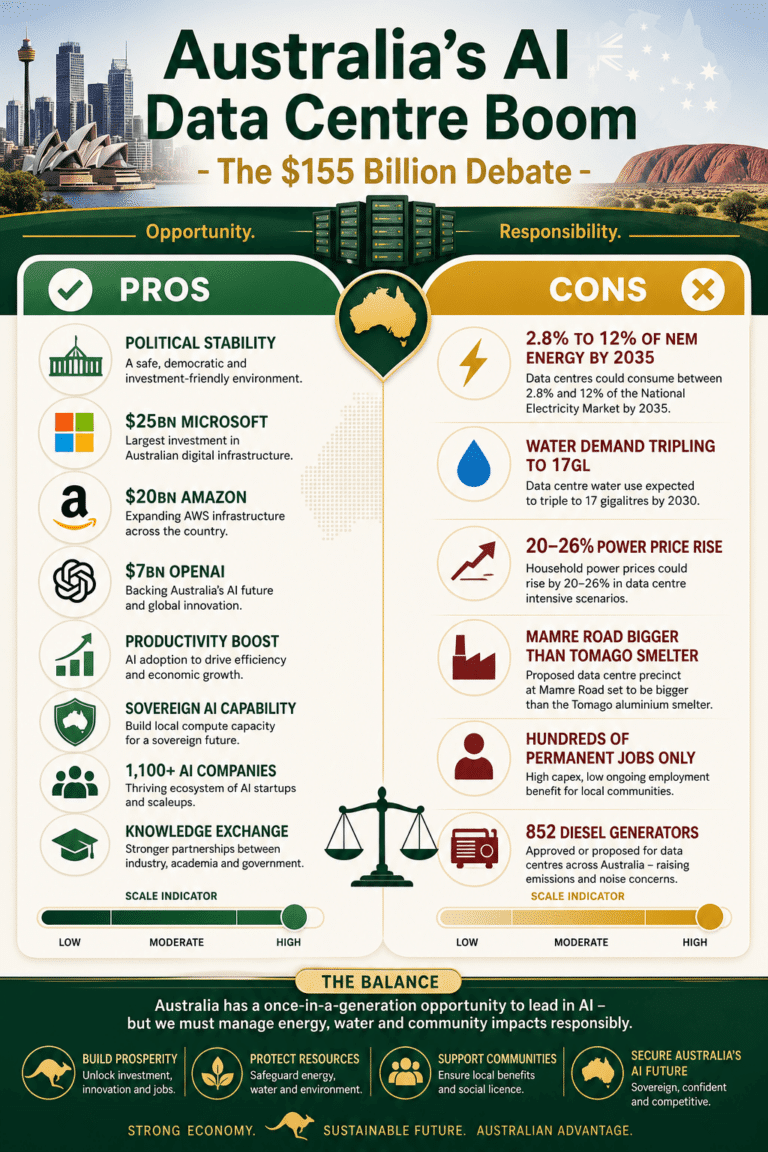
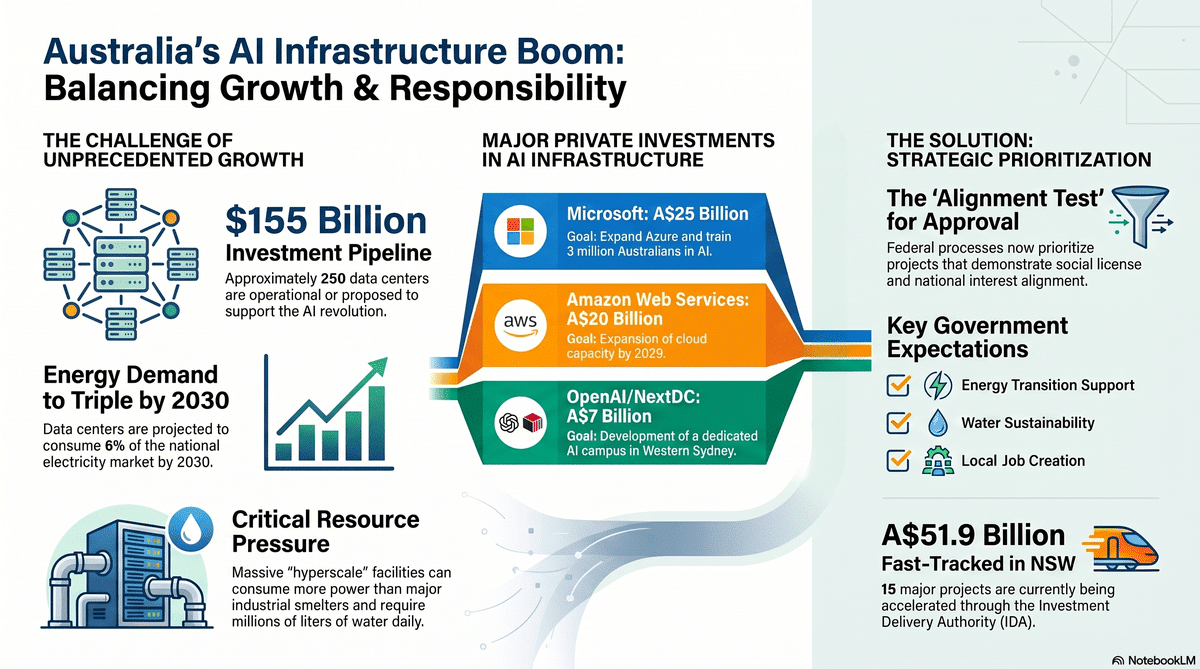
Here is a number that stopped me: $155 billion. That is the estimated investment pipeline for data centres in Australia over the next decade. Microsoft alone has committed $25 billion, its largest ever investment in the country. Amazon is spending $20 billion by 2029. OpenAI has partnered with NextDC on a $7 billion AI campus in Western Sydney.


<figcaption style=

These are not small numbers. This is the biggest industrial build-out Australia has seen since… well, maybe ever. However, it raises a question that no one seems able to answer cleanly: is this good for us?

Let me lay out both sides of the argument, because the answer matters for every Australian who pays an electricity bill, uses water, or cares about where the economy is heading.

Why Australia? Four reasons the money is flowing in

Australia did not wake up one day and find itself a data centre destination by accident. The country checks every box the hyperscalers are looking for.

Political stability and rule of law. In a world where tech companies are increasingly worried about export controls, sudden regulatory shifts, and geopolitical risk, Australia offers something rare: predictability. The government has positioned itself as rigorously regulated but tech-friendly, and the Commonwealth Expectations framework launched in April 2026 gives investors a clear approvals pathway.

Proximity to Asia. Australia sits next to the fastest growing digital markets on earth, connected by 17 submarine cables with more under construction. Our time zones overlap with key Asian markets. We can offer backup data storage and processing for customers across the region.

Renewable energy potential. The big tech companies are the largest corporate buyers of renewable energy globally. Australia has abundant solar and wind capacity, and lower industrial energy prices than competing hubs like Singapore. The marketing pitch writes itself: build green data centres in Australia and power them with our renewable resources.

Land and distance from conflict zones. Large tracts of available land near urban centres, combined with geographic distance from active conflict zones, makes Australia a safe bet for infrastructure that needs to run uninterrupted for decades.

The case for: this is the foundation of the next economy

Pat Bustamante, a senior economist at Westpac, put it plainly to the Guardian: “There’s absolutely no question that the data centre boom is good for the economy. It’s laying the foundation for the next wave of productivity growth. We saw this during the PC and IT revolution during the late 90s, and this is going to be bigger than that.”

The argument is straightforward. Data centres are the factories of the 21st century. They enable the AI capability that will drive productivity gains across every sector. Hosting that capacity onshore builds sovereign digital infrastructure, which the National AI Plan explicitly identifies as a strategic priority. Australia already has more than 1,100 private AI companies. This investment gives them the infrastructure to scale.

Beth Webster, an economics professor at Melbourne University, adds that foreign direct investment brings knowledge exchange: “I can’t see too many downsides as long as they have rules around it.”

NAB’s chief economist Sally Auld acknowledges the public anxiety about AI but says her research suggests the technology will augment rather than replace most jobs.

The case against: power prices, water and the jobs math

This is where the numbers get uncomfortable.

Energy. Data centres currently account for 2.8 per cent of electricity consumption on Australia’s east coast. The Australian Energy Market Operator projects that will triple to 7 per cent by 2030 and exceed 10 per cent by the mid-2030s. The proposed Mamre Road hyperscale data centre in Sydney’s west would alone consume 1.2 gigawatts of power, making it Australia’s single largest energy user, surpassing the Tomago aluminium smelter.

The Climate Council estimates that if this demand is not matched by new renewable generation, wholesale electricity prices could rise by 20 per cent across the national grid by 2035, and up to 26 per cent in NSW. Since wholesale prices make up about 40 per cent of a typical residential power bill, that hits households directly.

Water. Data centres use enormous amounts of water for evaporative cooling. Industry estimates suggest total water demand will more than triple from 5.5 gigalitres to 17 gigalitres over the next five years. Sydney Water is receiving applications for single data centres to use up to 40 million litres per day, equivalent to 16 Olympic swimming pools.

Jobs. This is the one that frustrates me most. These projects create thousands of construction jobs, but once operational, they employ only hundreds of people. For the scale of investment and resource consumption, the permanent employment return is surprisingly thin. US studies consistently show the same pattern: thousands of workers during the build, a fraction of that to run the facility.

Community opposition. The Mamre Road project faces active opposition from Penrith council, which does not want six four-storey buildings with 852 diesel backup generators in its backyard. This tension is playing out across multiple suburbs.

The framework that is supposed to manage this

In April 2026, the federal government introduced the Commonwealth Expectations, a set of five criteria that data centre projects must align with to be prioritised for approval: national interest, energy transition support, sustainable water use, investment in Australian skills and jobs, and strengthening research and innovation.

The industry reaction has been positive. The framework provides clarity. Fifteen major projects representing $51.9 billion in potential investment are already progressing through the NSW Investment Delivery Authority with fast-track pathways.

But the Climate Council argues the framework does not go far enough. It is a set of expectations, not enforceable standards. The Council wants mandatory requirements: data centres should have to build additional renewable capacity to match their demand, pay for the energy and water infrastructure they require, and report transparently on their consumption.

Alex Hooper from Oxford Economics Australia put it well: “There are huge opportunities but we need to be smart. There is some level of data centre investment that is good for Australia. The question is: how much?”

What I think

The AI data centre boom is coming whether we plan for it or not. The capital is already committed. The construction is already underway. The question is not whether to accept the investment. It is whether we have the regulatory backbone to make sure the benefits flow to Australians and the costs do not land on household electricity bills.

The Commonwealth Expectations are a start. But expectations are not requirements. Until data centre operators are required to build the renewable capacity they will consume, and pay for the water infrastructure they demand, the risk is that ordinary Australians end up subsidising the AI infrastructure of the world’s most profitable companies.

That is not a trade-off I am comfortable with.

Australia is about to build the equivalent of another Tomago aluminium smelter for every major city. The question is whether we own the power it produces or just the bill for it.

Related Reading

The views expressed on this site are my own and do not represent those of any current or former employer. Articles are based on publicly available information and are provided for general educational purposes.

North Korean Hackers Poisoned 144 AI npm Packages: Check Your Dependencies Now

I installed a package without checking the dependency tree. Most developers do. That complacency is exactly what North Korean hackers exploited.

On June 17, 2026, attackers compromised the ehindero npm account and injected easy-day-js into 144 Mastra AI packages. Microsoft’s Threat Intelligence team attributed the attack to Sapphire Sleet, a North Korean state-sponsored group. The malicious typosquat of the legitimate dayjs library ran a postinstall script that executed the moment anyone installed or updated an affected package.

The timing was deliberate. On June 16, the attacker published a clean easy-day-js@1.11.21 containing only legitimate dayjs code. Twenty hours later, they pushed 1.11.22 with an obfuscated 4,572-byte dropper. The postinstall hook ran node setup.cjs automatically. The dropper disabled TLS verification, dropped filesystem markers, and contacted attacker command-and-control servers.

On systems where the attackers already held access, the payload escalated further. It delivered a PowerShell backdoor, added persistence, configured Microsoft Defender exclusions, and installed a SYSTEM-context service implant. The attack required no user interaction beyond a single npm install.

Mastra is an AI framework used to build agents, workflows, and retrieval-augmented generation pipelines. The developers using it often handle production data, API keys, and customer environments. By compromising 144 packages at once, the attackers didn’t just hit one team. They hit every project depending on any version in that scope.

The attack chain reveals exactly how npm’s trust model breaks down. The compromised ehindero account held publish rights across the entire Mastra ecosystem. With that access, the attacker mass-poisoned all packages in one sweep. SemVer ranges like ^1.11.21 automatically resolved to the weaponized version.

Microsoft notes Sapphire Sleet previously compromised the axios npm package in April 2026. The pattern repeats: target widely-used JavaScript libraries, use postinstall hooks for silent execution, harvest credentials. The group focuses on the financial sector, according to Microsoft’s assessment.

What should you do if you used any @mastra/* package between June 16 and June 20? First, audit your package-lock.json, yarn.lock, or pnpm-lock.yaml for easy-day-js@1.11.21 or 1.11.22. Second, rotate every secret, API key, and token stored on affected machines or CI/CD runners. Third, scan for unexpected processes or outbound connections from your build environments.

This incident exposes a larger problem. AI development has accelerated open source consumption. Teams adopt frameworks like Mastra without applying the same supply chain scrutiny they’d use for production infrastructure. The dependency tree is only as strong as its weakest maintainer account. Until npm enforces multi-factor authentication, hardware keys, or signed packages by default, these attacks will keep working.

Practical steps right now: lock your dependency versions, review every new entry in lock files before building, and enable audit tools like npm audit or Socket.dev in your CI pipeline. If you maintain popular packages, require hardware security keys for publishing. These measures take minutes to implement and hours to regret ignoring.

A single compromised maintainer account with publish rights to 144 packages is all it takes to turn every downstream build into an attack surface. If your CI pipeline runs npm install against the internet without verification, you are trusting strangers with your keys.

Related Reading

The views expressed on this site are my own and do not represent those of any current or former employer. Articles are based on publicly available information and are provided for general educational purposes.

Your AI Agents Are Now a Security Risk: What the Last 48 Hours Proved

I woke up this morning to three security disclosures that should be setting off alarms in every boardroom and IT department.

First, Microsoft researchers published details on AutoJack on June 18, with the security community simultaneously documenting the parallel Agentjacking campaign. These aren’t theoretical vulnerabilities sitting in a research paper collecting dust. A planted URL in a browsing AI agent’s context executes arbitrary code on the host machine with zero credentials required. There is no user interaction needed beyond the agent navigating to a malicious page. The root cause is the localhost trust assumption baked directly into agentic architectures. Most teams assume localhost is safe because it’s inside the network perimeter. In an AI agent world, that assumption is now lethal. Initial exploit targets included AutoGen Studio MCP WebSocket via malicious webpage rendering. Every framework that lets agents browse, click links, or render HTML is potentially exposed.

The second story is FortiBleed. A Russian-speaking threat group leaked 86,644 FortiGate VPN credentials to the dark web as of June 19. That is not a typo. Eighty-six thousand six hundred and forty-four devices worldwide. Sixty-three percent came from default or built-in Fortinet system accounts that should have been disabled years ago. Thirty-five percent relied on generic admin logins that make forensic investigation impossible. Chevron, Samsung, AT&T, and Toyota are named in the dataset, confirming critical infrastructure exposure. CISA has already issued an advisory mandating immediate remediation for federal agencies. The fix is boring but essential: audit every FortiGate admin account, rotate all credentials, disable unused built-in system accounts, and implement multi-factor authentication on every VPN gateway. If you still have default passwords on any internet-facing system, assume it is already compromised.

Third, LLMjacking has evolved from a cost-drain nuisance into active offensive infrastructure. Sysdig research released June 17 confirmed stolen AI compute is now powering fully autonomous penetration testing frameworks. No human in the loop. Misconfigured, internet-exposed Ollama model servers are weaponized as attacker decision engines. The attack chain is terrifyingly efficient: service fingerprinting, vulnerability matching, web reconnaissance, proof-of-concept exploit generation, SQL injection crafting, privilege escalation. All automated. All run from stolen GPU credits. Self-hosted AI inference endpoints using Ollama, LocalAI, or vLLM are now potential command-and-control infrastructure. Treat them with the same security rigor you would apply to a traditional C2 server.

On the policy side, the White House issued NSPM-12 and CISA released BOD 26-04 in June 2026. These represent the first comprehensive federal AI security architecture directives since the revocation of EO 14110. Federal contractors, cloud providers, and critical infrastructure operators have 30 to 90 days to comply. The cascading effect will reach every enterprise that touches government data or systems.

What does this mean for your business? Here are three practical steps you can take this week.

Audit every AI agent deployment today. If your agent can browse the web, run code, or interact with MCP servers, enforce sandboxing, network isolation, and process separation immediately. Default credentials on any internet-facing system are no longer acceptable. Rotate them now. However, if you are running self-hosted inference with Ollama, LocalAI, or vLLM, pull them behind zero-trust controls before the weekend.

The attackers are already using AI autonomously. Your defenses need to catch up.

Autonomous AI agents are the new perimeter, and most organizations haven’t drawn the fence yet. The gap between attacker automation and defender response is widening by the day.

Related Reading

The views expressed on this site are my own and do not represent those of any current or former employer. Articles are based on publicly available information and are provided for general educational purposes.