

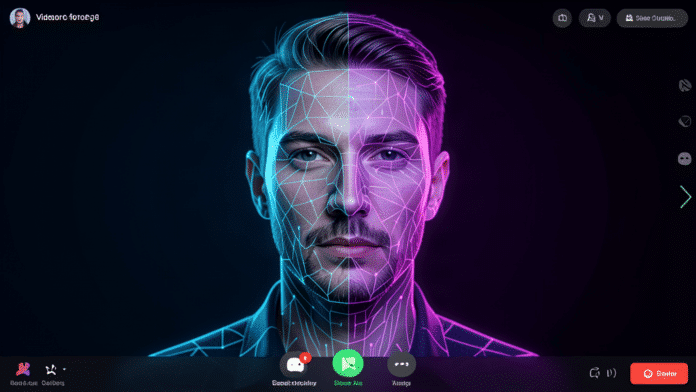

AI startup Tavus has previewed Griffin, a ‘Human Interaction Model’ that renders a lifelike person who can hear, see, talk and react over live video. The results are startling enough that nearly half of testers thought they were talking to a real person.
What Makes Griffin Different
Most AI video avatars operate on a strict turn-taking model. You speak, the AI processes, then the AI responds. Griffin breaks this pattern entirely. It watches and listens continuously, nodding mid-sentence or weaving details from the user’s screen into its responses in real time.
In a face-to-face study of Griffin-Lite, 48 per cent of participants believed their conversation partner was human. That is a leap from just 2.4 per cent in the company’s previous models. The model also scored within 0.09 points of real people on NVIDIA’s VideoFDB benchmark for natural video chat, outperforming the next-best AI model by more than a full point.
The Good and the Dangerous
The positive applications are obvious. A lifelike personal tutor that can read a student’s confusion and adjust its explanation. A companion for an elderly parent that actually seems present. These are genuine use cases that could improve real lives.
However, the same technology in the wrong hands becomes a scammer’s dream. AI video is already fooling people across the web, and this demo shows where things are heading: real-time, responsive avatars that further blur the boundary between reality and simulation.
A Careful Rollout
Tavus is not rushing Griffin to the public. The company is making Griffin-Lite available only to trusted testers for now, continuing work on safety and disclosure features before any wider release. That measured approach is welcome, given the potential for misuse.
The broader lesson is that the line between human and AI interaction is thinning faster than most people realise. We are moving past the era of obvious chatbots and robotic voices into a world where a video call might be with someone who is not there at all. That raises questions not just about technology but about trust, authentication and how we navigate an internet where seeing is no longer believing.
The Bottom Line
Tavus Griffin represents a genuine leap in real-time AI interaction. The upsides are meaningful, but the risks demand equally serious attention. For now the technology stays behind closed doors, which is exactly where it should be until the safeguards catch up.
