


You can measure a company’s ambitions by what it builds for itself. OpenAI just released the GPT-5.6 family, and the message is clear: it wants ChatGPT to become the workplace superapp that customers do not leave.
The headline release is Sol, a flagship model that lands slightly below Fable on the Anthropic Alignment Index yet tops it on agentic coding, compute use, design, and cybersecurity. OpenAI is pricing Sol at parity with GPT-5.5, with rates from $5 to $30 per million tokens, while the lower-tier Luna model drops to $1 and $6 per million tokens. Sam Altman framed the move plainly: “every enterprise now is thinking about spend.”
GPT-5.6 also introduces a new Ultra mode for maximum performance, and OpenAI revealed that Sol autonomously post-trained Luna, an internal milestone that signals more self-improving pipelines are on the way.
The Work Play
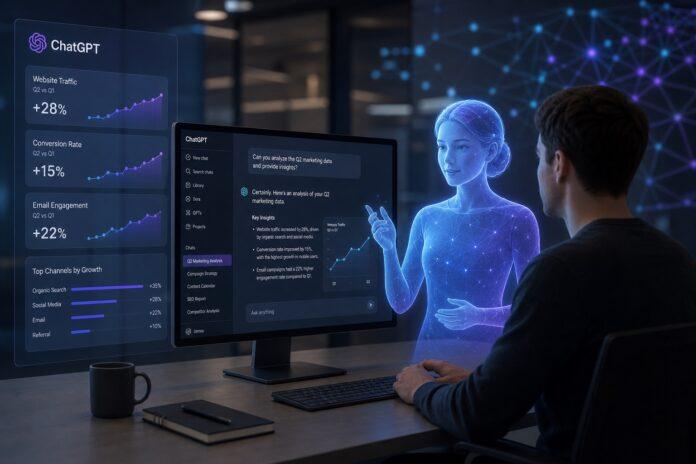
ChatGPT Work is OpenAI’s answer to Anthropic’s Claude Cowork. It places the Codex engine inside a more accessible platform aimed at everyday business tasks. The Codex app itself is merging into ChatGPT’s revamped desktop client, which now includes a built-in browser and computer control alongside the new Work agent. That convergence is the real story.
For years, OpenAI has chased the superapp dream. Work and the desktop merge are the first tangible steps toward it. Users will be able to plan, browse, code, and act within one interface rather than switching between specialist tools.
The Price and Practicality Angle
Those hoping for a model that decisively outclasses Fable will be slightly disappointed. Sol trails on general intelligence benchmarks. However, it comes in cheaper and avoids the usage tightrope that Claude Pro users know too well. For teams calculating token budgets, that difference matters.
Sol is also stronger on agentic coding, with validated gains in cybersecurity and design tasks. For organisations already using Codex or GitHub Copilot, the improvement will be immediately visible.
The Ultra mode targets users who need maximum output and are willing to pay premium rates. Its arrival alongside the cheaper Luna tier gives OpenAI a fuller pricing ladder than it has ever offered.
Why It Matters
OpenAI’s superapp ambitions are no longer abstract. With Work, the merged Codex desktop app, and a browser built into the client, the company is building the connective tissue for an everyday AI operating layer.
The detail that interests me is the autonomous post-training of Luna by Sol. If that process scales, future releases could improve themselves without the same human-labelled fine-tuning overhead. That would change release cadence, cost structures, and safety dynamics across the industry.
The model may not be a Fable killer. But it is cheaper, more versatile, and packaged inside a platform that is trying to become indispensable. OpenAI is betting that convenience and consolidation will win more users than benchmark headlines. That bet looks smarter with every new integration.