


The Moment Everything Changed
A few days ago, a Chinese AI startup called Moonshot AI did something that’s supposed to be impossible. They released an open-weight model with 2.8 trillion parameters that can go toe-to-toe with the most powerful proprietary systems on the planet. Not just on paper, but in real, live demos where it generates fully playable 3D games, complete macOS clones, and interactive data visualisations from a single sentence.
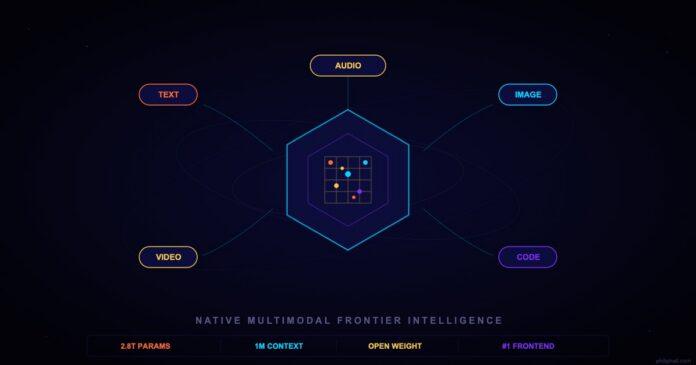
The model is called Kimi K3. It is natively multimodal, meaning it understands text, images, and video natively within the same architecture. It has a 1 million token context window. And here is the part that should keep Silicon Valley executives awake at night: the full weights will be released as open source on July 27, 2026. Anyone can download it, modify it, run it locally, and build on top of it.
This is not incremental improvement. This is a genuine step-change in what open AI can do.
What Is Kimi K3 Exactly?
Kimi K3 is Moonshot AI’s latest flagship model. Moonshot is a Beijing-based startup backed by Chinese tech giants Alibaba and Tencent. They have been quietly building towards this moment for years, and K3 represents the payoff.
This week on the Moonshots podcast, Emad Mostaque (former Stability AI CEO) called this an “AI Sputnik moment” — and he was not exaggerating. The episode, released moments after K3 dropped, captures the raw shock rippling through the industry. A Chinese open model just jumped the fence and landed at number one on the frontend coding leaderboard. No one saw it coming this fast.
The headline numbers are staggering:
- 2.8 trillion parameters — the largest open-weight model ever released
- 1 million token context window — it can process entire codebases, books, or research papers in one go
- Native multimodality — text, images, and video are all native input types
- Mixture of Experts architecture — 896 experts with 16 active per inference, keeping costs manageable
- Kimi Delta Attention and Attention Residuals — novel architectural innovations that improve information flow across depth and sequence length
- Priced at $3/$15 per million tokens — roughly 8 times cheaper than Claude Fable 5 for comparable capability
The pricing alone is remarkable. With cache hits, input tokens cost around 30 cents per million. That means a complex coding task that costs 38 cents on Fable 5 costs about 3 cents on Kimi K3. And in several third-party benchmarks, K3 actually delivers better results.
Why Multimodal Matters More Than You Think
There is a reason I am emphasising the “natively multimodal” aspect. Most models claim multimodality but implement it as a bolt-on. You feed them an image, they OCR it into text tokens, and process it through the same text pipeline. The model never actually “sees” the image in the way a human does.
Kimi K3 does it differently. Its architecture processes visual and textual information within the same attention mechanism from the ground up. That means it can reason about what it sees, not just read text extracted from an image. The proof is in the demos: it edited a full video teaser from 56 source clips, handling clip selection, motion-matched cuts, frame-accurate beat synchronisation, and audio processing. It generated an interactive 3D product experience where a chili pepper rotates and splits apart as you scroll, revealing seeds inside. It built a Red Dead Redemption 2 style open-world game with terrain, NPCs, and gameplay systems from a single prompt.
These are not toy examples. Each one of these would have required a team of developers weeks to build. Kimi K3 does them in minutes.
The Benchmark Story
Benchmarks can be misleading, but when a model tops multiple independent leaderboards simultaneously, it is worth paying attention. Here is where Kimi K3 stands:
- World of AI benchmark: Ranked number three overall, behind only Claude Fable 5 and GPT-5.6 Sol
- Design Arena: Number one, ahead of Claude Fable 5 — the first time an open model has taken this spot
- Program Bench and Sway Marathon: Number one
- Terminal Bench: Within 0.5% of GPT-5.6 Sol
- Frontier Sway: Just behind Fable 5
- BrowseComp: Over 91%, comparable to Fable 5 and GPT-5.6 Sol, at a fraction of the cost
- Artificial Analysis Intelligence Index: Better than 97% of models compared
The frontend coding results are where it truly shines. In blind human-preference tests on Arena.ai, Kimi K3 outperformed Fable 5 on web interface engineering. When given the same prompt to build a detailed armory bay with lighting, props, and atmosphere, K3 created a complete 3D scene with textured walls, weapon racks, ammo crates, and proper lighting. Fable 5 produced an empty room.
The gap was not small. It was not even close.
The Geopolitical Elephant in the Room
Kim K3 arrives at a deeply sensitive moment in the global AI race. Just weeks ago, the US government forced Anthropic to temporarily withdraw its Fable 5 and Mythos models due to cybersecurity concerns. The message was clear: advanced AI is now considered critical national infrastructure, subject to strict controls.
Meanwhile, China just released the largest open-weight model ever. Kimi K3 is not subject to US export controls. It is built with Chinese capital, by Chinese engineers, on Chinese-supplied hardware. The narrative that China trails the US by years in AI development is now demonstrably false. In several important categories, they have pulled ahead.
The open nature of K3 is worth dwelling on. When the weights drop on July 27, anyone with enough computing power can run this model. Researchers in developing nations can study it. Startups can fine-tune it for specialised applications. Rogue actors can try to weaponise it. Openness cuts both ways, and K3 will test whether the benefits of open-weight release outweigh the risks.
US officials have already expressed concern. David Sacks, the White House AI and Crypto Czar, posted on X: “This is concerning. For the first time, a Chinese model Kimi K3 is now number one in the Frontend Code Arena, surpassing Claude Fable 5. This is a 17 place jump.” The technology competition between the world’s two largest economies just entered a new phase.
What This Means for Developers
If you are a developer, Kimi K3 changes your calculus in three important ways.
First, the price-to-performance ratio is now absurd. You can access frontier-level coding capability for roughly what you would pay for a mid-tier model. The cost efficiency means you can run agentic workflows that would have been prohibitively expensive six months ago. Multiple agents, long-horizon tasks, iterative code generation — all suddenly affordable.
Second, the open weight release changes the risk profile. When you build on a proprietary model like GPT-5.6 or Claude Fable 5, you are renting capability. The provider can change pricing, modify behaviour, or discontinue access at any time. With Kimi K3, you own the weights. You can run them on your own hardware, configure them to your specific needs, and never worry about API deprecation.
Third, the multimodal capability is genuinely next-level. The ability to feed a model a video of a UI interaction and have it generate the code for that interaction from scratch is not theoretical. It is working today. The chip design demonstration alone — where K3 designed an actual chip for running a nano version of itself in a single 48-hour autonomous run — hints at where this technology is heading.
How to Get Started with Kimi K3
You have several options to try Kimi K3 right now:
- Kimi Chat (free): Access K3 through the Kimi chatbot at kimi.com. This is the easiest way to test it.
- Kimi Code: A dedicated coding harness that pairs with the model for agentic development.
- Kimi Work: A productivity interface with widgets and dashboards for knowledge work.
- API access: Available through platform.kimi.ai or OpenRouter at $3/$15 per million tokens.
- K3 Swarm: Deploy multiple K3 agents to work collaboratively on complex tasks.
The thinking mode is enabled by default, which gives the model time to reason through complex problems before responding. If you need faster results, you can switch to K3 Fast for quicker generation at slightly reduced quality.
The Limitations You Should Know
I am not going to pretend K3 is perfect, because it is not. There are real limitations worth understanding.
Sensitivity to thinking history. K3 was trained in a preserved thinking history mode. If the agent harness fails to pass back all historical thinking content, generation quality becomes highly unstable. This means you cannot easily switch to K3 mid-session from another model without resetting context.
Excessive proactiveness. K3’s training emphasises long-horizon, challenging tasks. As a result, when it encounters minor issues or ambiguous user intent, it may make unexpected decisions on your behalf. If your application requires the agent to operate within strict boundaries, you need to impose explicit behavioural constraints in the system prompt.
Slight UX gap. Moonshot AI is transparent about this: despite being highly competitive overall, K3 shows a noticeable gap in user experience compared with Fable 5 and GPT-5.6 Sol. The interface, documentation, and ecosystem around the model are still maturing.
Computing requirements. At 2.8 trillion parameters, running K3 locally requires serious hardware. This is not a model you can run on a laptop. Cloud inference or quantized versions will be the practical path for most users.
The Bottom Line
Kimi K3 is one of the most important AI releases this year. Not because it is the best model in every category — it is not. Fable 5 still holds the edge in certain reasoning tasks, and GPT-5.6 Sol is more polished in conversational interaction. But K3 is competitive with both of them at a fraction of the price, and it is open weight.
The open-source AI community has been waiting for a moment like this. For years, the argument was that open models would eventually catch up to proprietary frontier systems. That argument no longer requires faith. The evidence is here, it is reproducible, and it costs three cents to test.
China caught up faster than most people expected. The question now is what happens next, because July 27 is when the weights land, and after that, anyone can build on them.
Have you tried Kimi K3 yet? I’d love to hear what you built with it. Share this article if you found it useful, and follow me on X at @philiphall for daily AI coverage.